
Bhakti Lata (Part 2) | HH Bhanu Swami Maharaj | ISKCON Japan | November 6, 2025 |
jaya rādhā-mādhava kuñja-vihārī
gopījana-vallabha giri-vara-dhārī
yaśodā-nandana vraja-jana-rañjana
yamunā-tīra-vana-cārī
Hare Kṛṣṇa Hare Kṛṣṇa Kṛṣṇa Kṛṣṇa Hare Hare
Hare Rāma Hare Rāma Rāma Rāma Hare Hare
Jaya Prabhupāda Jaya Prabhupāda
Prabhupāda Jaya Prabhupāda
nama oṁ viṣṇu-pādāya kṛṣṇa-preṣṭhāya bhū-tale
śrīmate bhaktivedānta-svāmin iti nāmine
namas te sārasvate deve gaura-vāṇī-pracāriṇe
nirviśeṣa-śūnyavādi-pāścātya-deśa-tāriṇe
jaya śrī-kṛṣṇa-caitanya prabhu-nityānanda
śrī-advaita gadādhara śrīvāsādi-gaura-bhakta-vṛnda
Hare Kṛṣṇa Hare Kṛṣṇa Kṛṣṇa Kṛṣṇa Hare Hare
Hare Rāma Hare Rāma Rāma Rāma Hare Hare
HH Bhanu Swami Maharaj:
So, we talked about the planting the seed of bhakti and having it grow. So, when we begin bhakti, we have faith and then we begin the process of bhakti. But we still have material attachments and other obstacles to bhakti. The process of bhakti will destroy all of these problems, these anarthas. However, it will take some time. So, as they gradually get destroyed, then we can perform bhakti more steadily. So, we come from a position where we perform bhakti, but it’s unsteady due to different factors like attraction to material things and eventually we get to a stage, where we can perform bhakti very steadily, that’s called nishtitha.
So we can analyse the different types of obstacles or anarthas. There are four types. So, in previous lifetimes or even in this lifetime, we have done sinful activities. So, one effect of sinful activity, we have to suffer in various ways in this lifetime. But along with those sinful activities, we also carry over into this lifetime, certain impressions of enjoyment we get from those sinful activities. We also have done pious activities in previous lifetimes, this of course will give us, let’s say, money, fame, followers in this lifetime. We will also carry over into this lifetime, impressions of sattvic happiness. The third type of anartha is what arises because of offenses or aparadhas. And the fourth type is of anarthas that arise when we perform bhakti imperfectly.
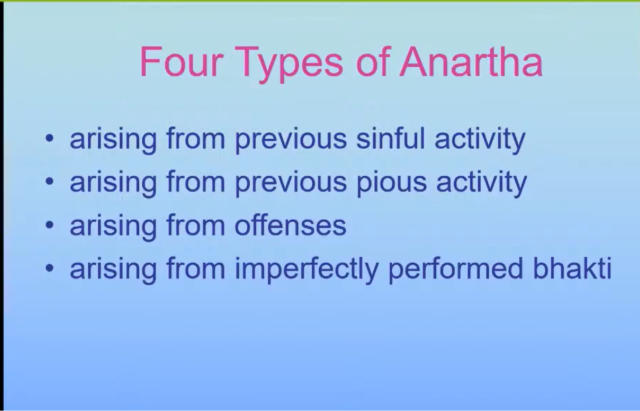
So, as I mentioned, sinful activities will produce all sorts of modifications of the kleshas like identification with the body, attraction, repulsion, etc. If we do a lot of sinful activities, we end up with a lot of ignorance.
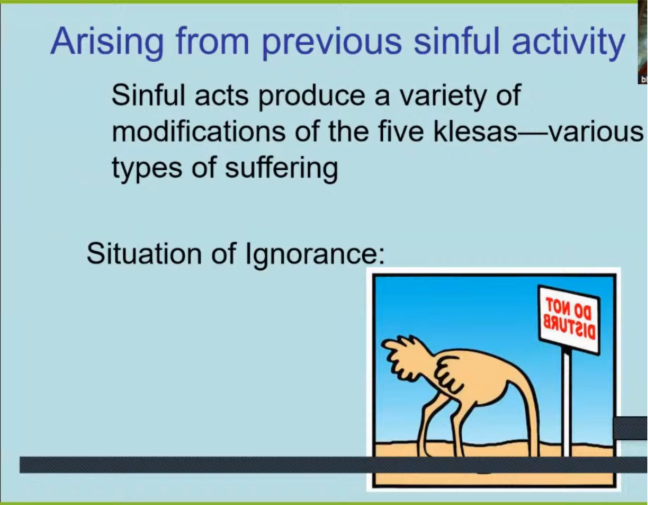
As I said, one of the kleshas is this identification with the material body, so that we get pride, etc.
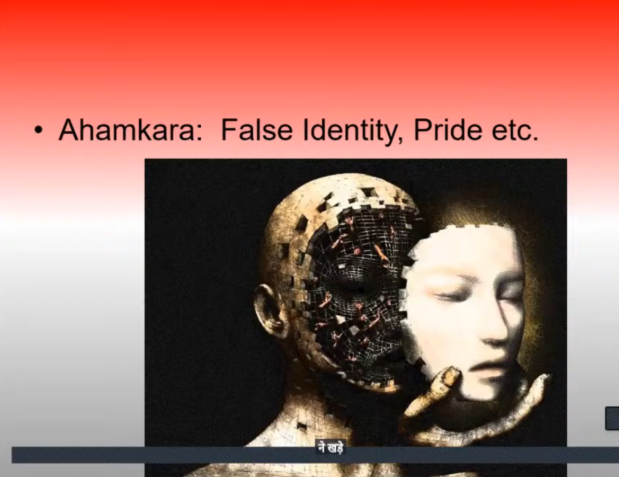
We develop all sorts of attachments.
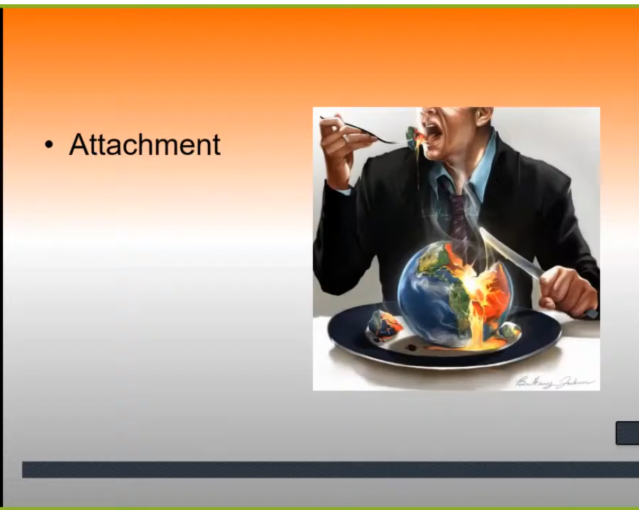
And all sorts of repulsions, things we hate [Laughs].
And this abhinivesha or fear of death [Laughs].
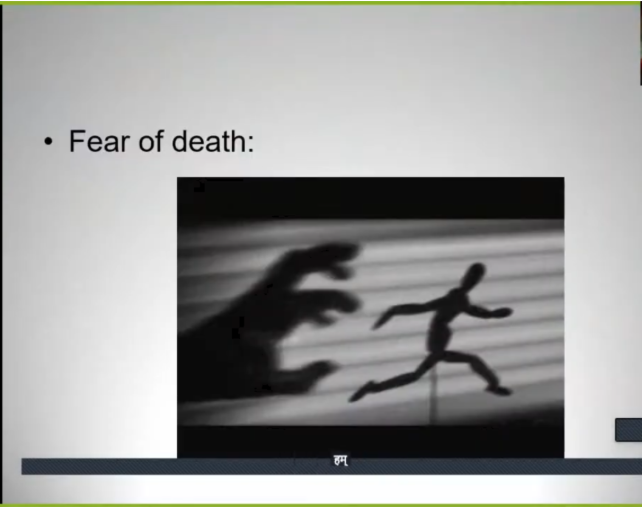
So these can create obstacles to our bhakti. If we do pious activities in previous lifetime, then we get some impressions of sattva carrying over, but we also get good karma of having money and followers and whatever in this lifetime. As a result of sattva, we may also develop an attraction for liberation rather than bhakti. So, sins, of course, are say, violence against ordinary living entities.
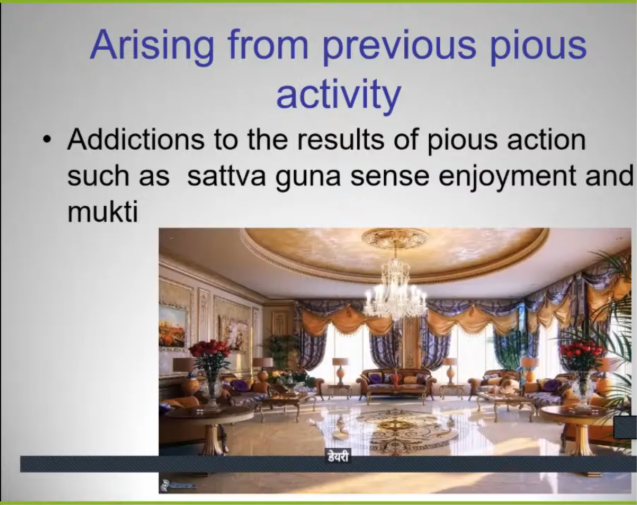
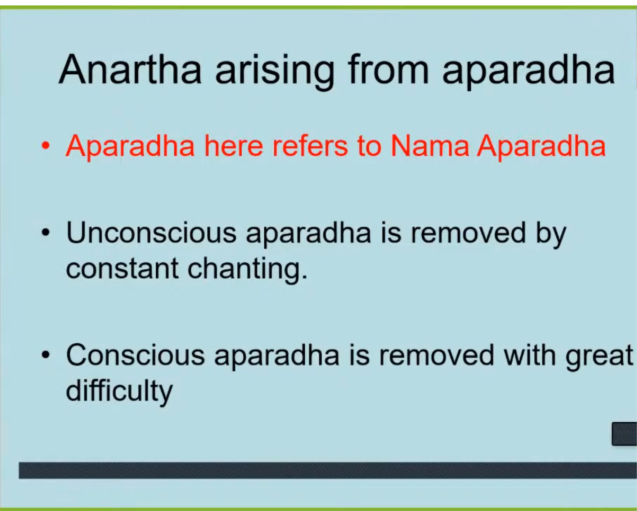
Aparadhas are also a sin, but they are a special type of sin [Laughs]. So, it means offense against the Supreme Lord or the deity, offense against devotional service, offense against devotees. So there are different types of aparadhas, like seva aparadhas, but they’re not considered to be so serious. The serious aparadhas are the nama aparadhas. So these nama aparadhas can cause destruction of bhakti. Sinful activities can cause some disturbance in bhakti, but they don’t destroy the bhakti. So if we do accidental aparadhas that we don’t know about, this can be removed by constant chanting of the name. If we do aparadhas in full awareness, with animosity, then the effect is very difficult to remove.
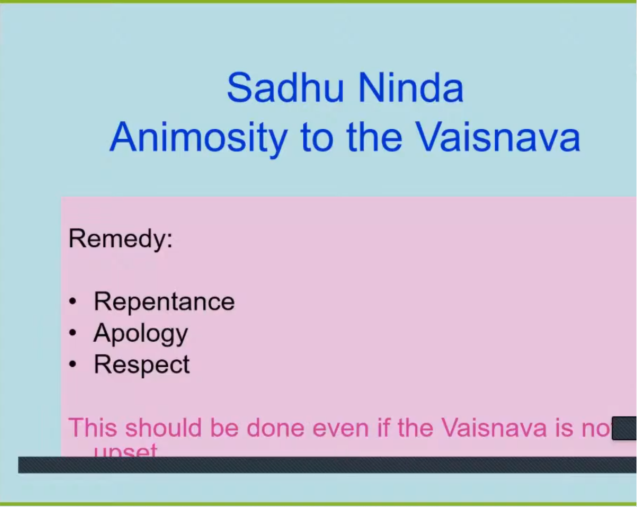
So among the offenses, sadhu ninda or animosity towards a devotee is very, very serious. And in Caitanya Caritamrita, Lord Caitanya says this is like the mad elephant, it can actually destroy the creeper of bhakti. So there’s a very specific process for getting, let’s say, remedy for the aparadha, Vaishnava aparadha. So the first step is we have to recognize, we’ve committed the aparadha and feel regret or repentance. Secondly, we have to go to that devotee who we’ve offended, we have to apologize. And then thirdly, we have to respect that devotee from that point onwards.
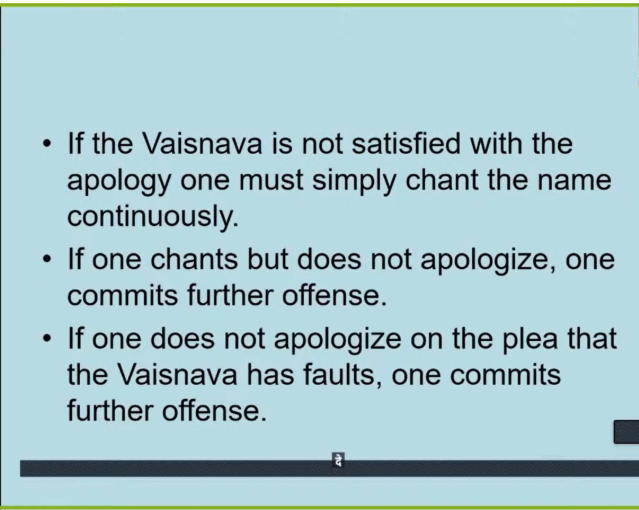
And even if the Vaishnava is not upset by the aparadha, we have to follow this process. When we don’t follow the process, the aparadha gets worse. You apologize, that Vaishnava may not accept the apology, what can you do? All you can do is chant the Holy name. So we have to follow this process. And if we give the excuse that this Vaishnava has faults anyway, why do we have to apologize, this again makes the offense worse.
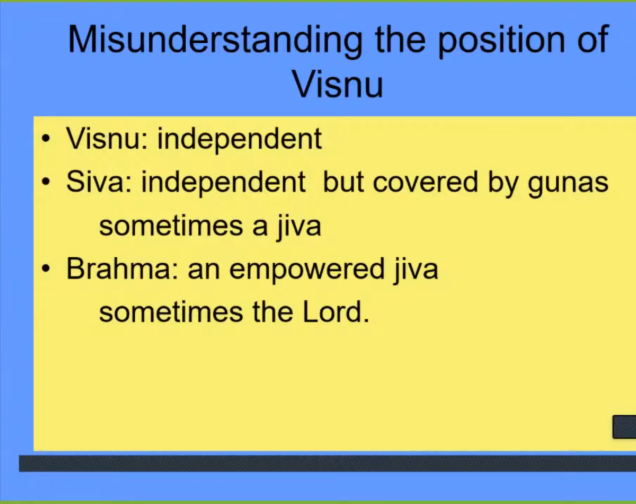
So the second offense is we misunderstand the position of Vishnu. So Vishnu is independent, nobody controls Supreme Lord. Shiva is also a form of the Supreme Lord, therefore no one is superior to him, but he appears to be covered by the gunas. Sometimes a Jiva can take the place of Shiva in a particular universe. Though Shiva is another form of Vishnu, he manifests five less qualities than Vishnu, therefore we put him in a separate category. Brahma, though he is topmost devata, is an empowered Jiva. So we can never put him on the same level as Vishnu. Of course, sometimes the Lord also may take the role of Brahma in a certain universe.
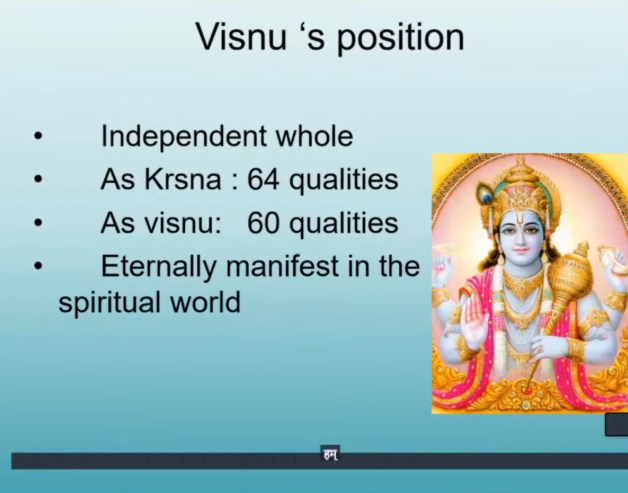
So, in Nectar of Devotion, Rupa Goswami shows that Krishna has 64 qualities, Vishnu has 60 qualities.
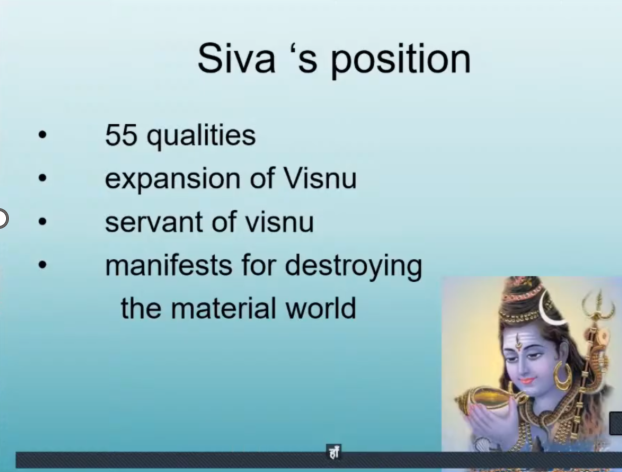
Shiva has 55 qualities, other Jivas will have 50 qualities. Shiva manifests in the material world to take charge of tamoguna and to destroy the universe. Although Shiva is a form of the Lord, he manifests five less qualities than Vishnu, and he acts as a servant of Vishnu.
So the third offense is to disrespect or criticize the Sruti, that means the Vedas Within the Vedas, we have karma-kanda and Jnana-kanda, which are inferior to bhakti. So many devotees will criticize the Vedas because of this karma-kanda or Jnana-kanda. So the devotees should not criticize the Vedas because they present karma and Jnana. So the Veda presents these processes for people who are not qualified for bhakti.
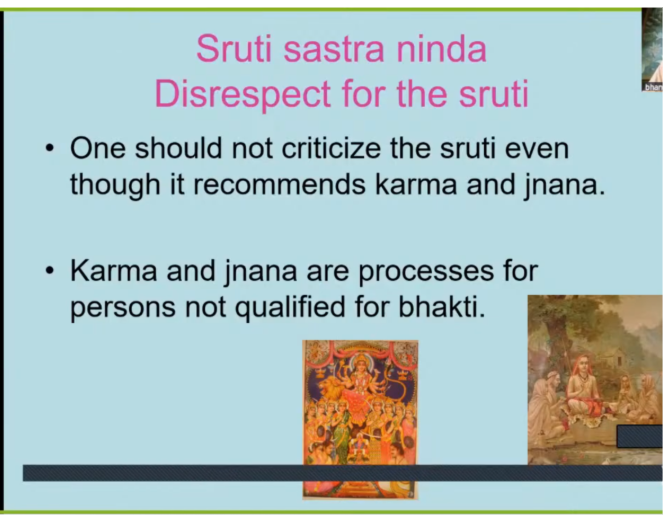
So of course, Sruti in general is regarded with great respect. It is non-different from the Supreme Lord. And it is only through scripture that we can get perfect knowledge of the Supreme Lord.
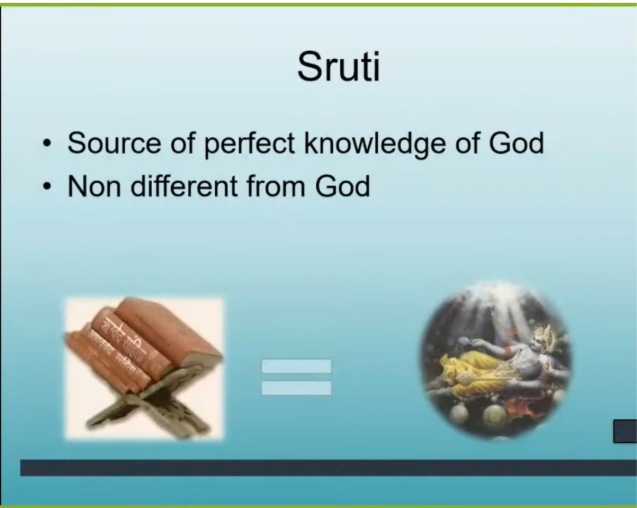
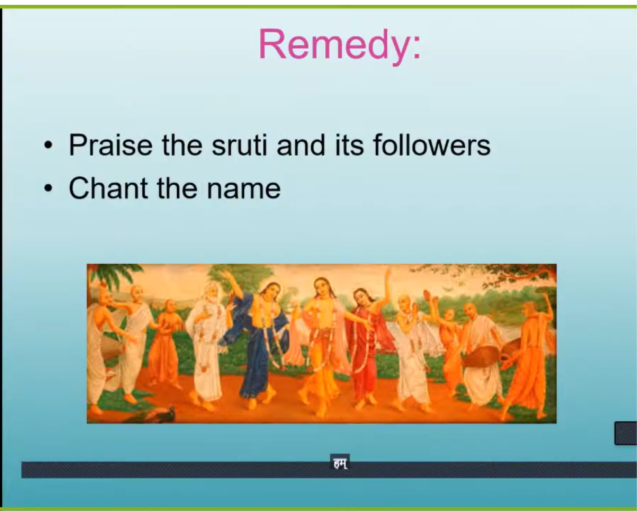
If we criticize the Vedas by mistake or whatever, then we have to recognize the fault. Instead of criticizing the Vedas, we praise the Vedas and the followers. And we should chant Holy name [Laughs].
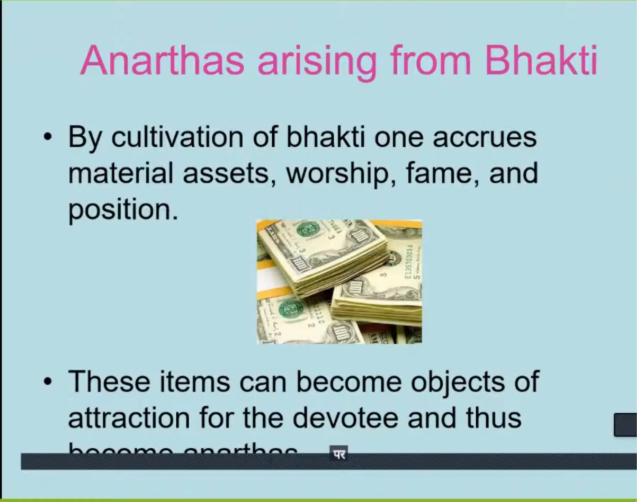
Okay, so the third type of anartha arise from, fourth type actually, arise from bhakti. Of course, bhakti destroys anarthas. How can it create anarthas [Laughs]? So the bhakti doesn’t directly create anarthas. But due to bhakti, not from good karma, from punya, etc, one can get assets, worship, fame, position. So if the devotee becomes attracted to these things, then this becomes anartha. So, we have the stages of bhakti, and we’re going through you know, Sraddha, Bhajana-kriya and Anartha nivritti, and we get to Nishtha, Ruchi, Asakti, Bhava and Prema.
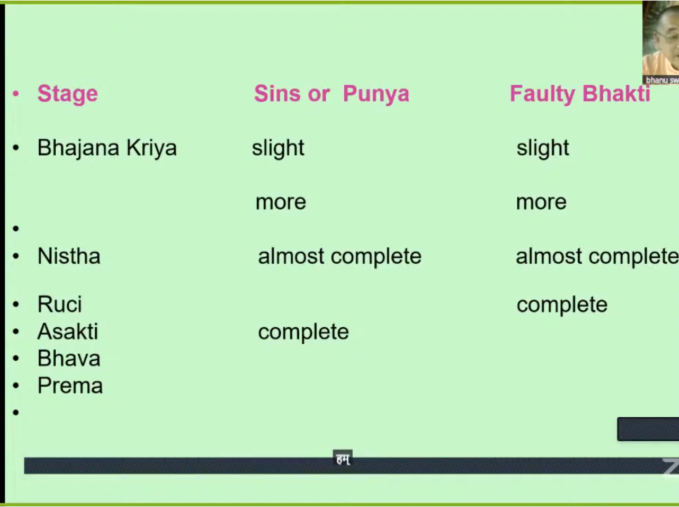
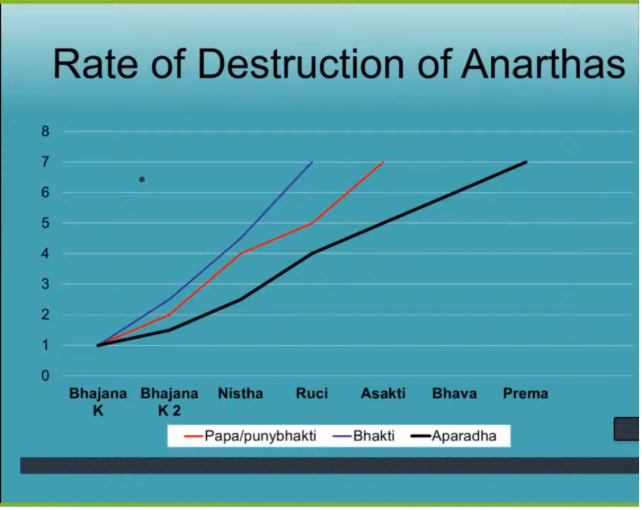
So the second column shows the amount of destruction [Laughs] of the anarthas due to sins and punya. So, by Bhajanakriya, we get slight destruction. As we continue with Bhajanakriya, we get slightly more. If we get to Nishtha stage, almost all gone and by the end of Asakti, the effect of anarthas due to sins or punya are completely gone. And when we do the bhakti and we become attracted to material assets and fame etc, in Bhajanakriya, slight destruction. We do more Bhajanakriya, more destruction. Nishtha, almost complete. By the end of Ruchi, all those anarthas are gone. In other words, the anarthas due to faulty bhakti are destroyed at a quicker rate than those due to sins or punya.
And then the Nama aparadhas. Slight destruction in Bhajanakriya. Nishtha, more destruction. By Bhava, generally destroyed. For Prema almost completely destroyed [Laughs]. And if you get to the spiritual world, then nothing is there.
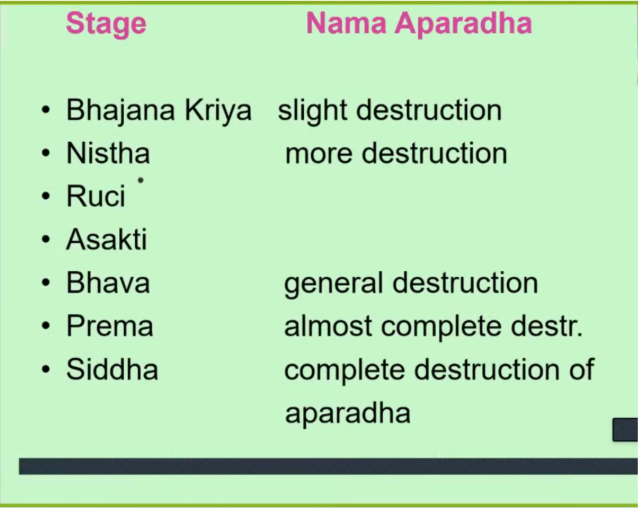
So in other words, the effect of Nama aparadhas on the bhakti will gradually reduce, but at a much slower rate than sins or those due to bhakti. So the blue line here indicates the anarthas due to bhakti. So by Ruchi stage, it’s gone. The red line indicates the sin and punya by the end of Asakti. And due to aparadhas then it continues up [Laughs] to the end of Bhava into Prema itself. So therefore, aparadhas, we have to be very careful of. So, we have these different stages of bhakti and gradually we progress.
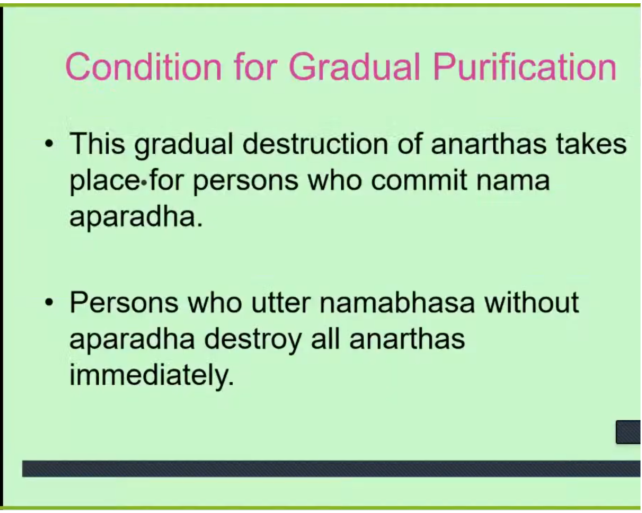
So this gradual progression through Anartha nivritti, Nishtha, Ruchi and Asakti etc. takes place for people who committed Nama aparadhas. If you have no Nama aparadhas, everything goes very quickly. The stages are not so well distinguished.
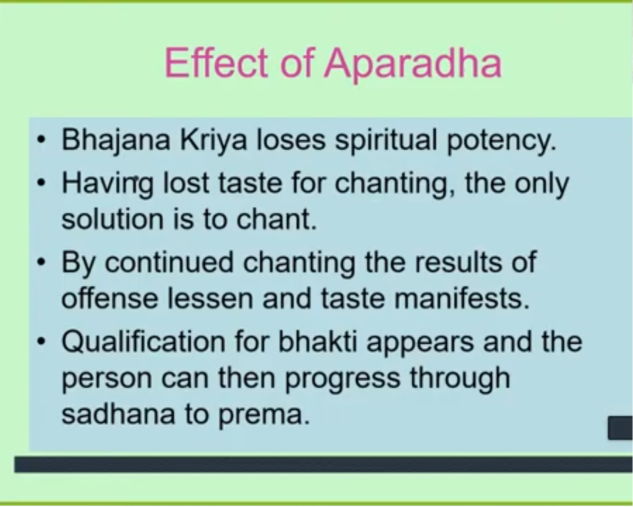
So, as I said, aparadha is the most serious, because it takes more time to get rid of the effect of aparadhas. Due to the Nama aparadhas, the whole Bhajanakriya becomes slower, weaker [Laughs]. Due to the Nama aparadhas, taste for chanting becomes weaker. But the only way we can get rid of the aparadhas is chanting itself. So, somehow or other, if we commit the Nama aparadhas, then we have to continue the process of chanting, even though we have less taste. As we continue to chant, effect of the Nama aparadha becomes less and we develop more taste for chanting.
So, bhakti and chanting will destroy suffering. But devotees who are chanting, but we see they suffer. Why do they suffer? So even they haven’t committed offenses, they may look like they’re suffering. So how does this happen? Answer is that, even though they don’t have committed offenses, the name does not always show its effects immediately, it will show gradual effects. So, in that case, if there is suffering in the devotee, we don’t take, attribute that to lack of effect of bhakti or due to his aparadhas or sins, but rather an arrangement of the Supreme Lord only.
Any question there?
Q & A:
1.) So when practicing devotee life for a long time, and even if we have knowledge of the aparadhas and every morning we are reciting the 10 offenses to the Holy name, but still we cannot stop committing aparadhas. Why?
Oh [Laughs]. Well, we may have knowledge, but knowledge is not enough. Certainly we do have to have knowledge. Along with that knowledge, we have to carry out the other processes of bhakti like chanting and hearing etc. In other words, somehow or other, through the processes of bhakti, our attraction to Krishna should increase. And anarthas should decrease [Laughs].
So, the aparadhas of course, are also a type of sin, but a sin against devotees and Krishna and the Holy name. So how does the devotee who has knowledge commit aparadha? He may still have these other anarthas due to sinful activity. And among those different impressions that are carried over, we will get raga and dvesha and ahankara. So we’ll manifest pride, manifest anger, manifest envy. So, these can influence our bhakti and make us commit offenses. Of course, through bhakti, all of these anarthas due to sins, piety should become less and less, but still even in Nishtha, there is some traces there. So they could influence us, and then we could commit Vaishnava aparadha, or something like that.
2.) So Ajamila wasn’t even a devotee, but just by chanting once, all his anarthas were destroyed. But a devotee who has faith, also on the stage of Bhava, have these results. Why?
So, Ajamila had this very quick destruction of all of his karmas because he had committed no aparadhas. So, therefore chanting with no devotion could destroy all of his karmas. They did not create bhakti [Laughs].
So a devotee with faith, he chants, and of course he also destroys karma. But if he has committed aparadhas previously, then the karmas are going to get destroyed at a slower rate. So, because karmas are remaining, then he may also get some suffering.
However, the devotee may not have committed aparadhas, he may still appear to suffer. In other words, it looks like still the karmas are all not destroyed. But as I said here, sometimes the name hides its powers. So even if the sins are destroyed, it does not look like they’re destroyed [Laughs].
Even in the case of Ajamila, all of his karmas were destroyed first time he named his son Narayana, but it didn’t look like those karmas were destroyed, for the rest of his life, he continued to be a sinful person [Laughs]. He was not aware, his karmas were gone, and even the Yamadutas were not aware that his karmas were gone [Laughs]. So, external appearances are not always true [Laughs].
Devotee: So basically Ajamila, his karma was within, actually destroyed, but from the outside it didn’t look like it was.
HH Bhanu Swami Maharaj: Yeah, yeah. And he committed some more sinful activities, but there were no effect of that also [Laughs].
Devotee: So that means that, devotees who are chanting with faith might look like they are suffering. But actually may be their karma could actually be destroyed already.
HH Bhanu Swami Maharaj: Yeah and it could be arrangement of the Lord only. It’s also explained that even if you have Prema and you’ve still got your material body, it may look like you suffer. So the devotee may get accident, devotee may get sick, devotee dies, it looks like you got a material body and you’re suffering karma also. So actually it is not karma, because if you have Prema, there is no karma. So this again is arrangement of the Lord. It looks like karma, arrangement of the Lord only.
3.) When we read scriptures, I think scriptures are like Supreme Lord Himself. Sometimes I’m reading like, on the sofa I’m relaxing. Do I have to be careful? Is that also offense to the scripture? I should make sure I’m respecting it.
HH Bhanu Swami Maharaj: How do you mean relaxing [Laughs]?
Devotees : [Laughs]
HH Bhanu Swami Maharaj: Well, if we’re reading the scripture, we should try to pay attention. Just like when we’re chanting, we should try to pay attention [Laughs]. So the more attention and devotion we can show for the scriptures as for chanting, then the better effect we get.
4.) Maharaj ji, in the last class we studied that seed is given by the mercy of Krishna and the devotees, and it is also stated in the Caitanya Caritamrita 19.151. Also in Caitanya Caritamrita 22.107, it says pure love for Krishna is eternally established in the hearts of the living entities. It is not something to be gained from another source. So can you please elaborate on this? What does it is trying to say?
So this is actually an explanation of a verse from the Nectar of Devotion. And Rupa Goswami, he defines sadhana bhakti. So he explains that, in sadhana bhakti, we utilize the mind and the senses to come to the stage of Bhava. And then he explains what is Bhava. So Bhava actually means Sthayi Bhava. This means a spiritual relationship with Krishna. And then he says, this is not something that you create through sadhana, this Bhava. It simply manifests. Actually, it’s eternal. That relationship with Krishna is eternal, it cannot be created at a certain point in time. But it manifests in the Jiva through sadhana.
Devotee: Thank you Maharaj ji, so here, the pure love is not that, the seed of a creeper, but it is related to the Bhava that develops automatically.
HH Bhanu Swami Maharaj: Yeah. Of course, bhakti itself is spiritual, coming from Krishna Himself, so it’s also eternal [Laughs]. At the same time, by the mercy of devotees and Krishna, then we get the seed of bhakti in the heart, but it’s actually eternal. So we can say that bhakti and Bhava and Prema are eternally in the spiritual world, but at a certain point, they will manifest in the Jiva.
Devotee: Why do you need sadhana to reach that stage?
HH Bhanu Swami Maharaj: So, of course, in some cases [Laughs], it can happen very suddenly, by great mercy, you can suddenly get Bhava or Prema. But usually, because the Jivas are in a conditioned state with, you know, ahankara and ignorance, etc, then it will take time for bhakti to establish itself in the Jiva. And here we’re describing how gradually anarthas are destroyed. The anarthas create obstacles. So, in most cases, these are gradually dissipated along with the increase of bhakti in the Jiva. So, it’s something like a planting a seed and growing a plant. So, in beginning stages, there is a struggle, because we have so many anarthas. So, therefore, the bhakti is little, and gradually it increases, increases, increases, as the anarthas decrease. If a Jiva was already very pure, then when it gets bhakti, immediately it would manifest into Bhava and Prema [Laughs].
5.) Hare Krishna Maharaj. Maharaj in Caitanya Caritamrita it is mentioned that, nitya-siddha kṛṣṇa-prema ‘sādhya’ kabhu naya śravaṇādi-śuddha-citte karaye udaya.
HH Bhanu Swami Maharaj: That’s the same verse he quoted [Laughs].
Devotee: Yeah, so this, this sloka, śravaṇādi-śuddha-citte karaye udaya here we can see it is already there, that prabhu mentioned. But in sadhana bhakti, most of us, atleast myself, I cannot get the taste of Krishna’s name. So, is it actually possible in sadhana stage to get the taste in chanting? And if it is possible, then would Your Divine Grace kindly point out some brief points that help us to actually get the taste in nama?
HH Bhanu Swami Maharaj: Well, after Nishtha, we have a stage called Ruchi, which is taste. However, from the very beginning, there has to be a little taste. But, it’s compared to a person with jaundice, you have jaundice, sugar does not taste very sweet. But, as you keep taking the sugar [Laughs], it gradually becomes sweeter, as you get cured of your disease. So, therefore, the taste will manifest more when the anarthas are significantly reduced.
Hare Krsna!
Devotees: HH Bhanu Swami Maharaj ki jai!!! Srila Prabhupada ki jai!!!