Bhakti Lata – 3 | HH Bhanu Swami Maharaj | ISKCON Japan | 13 Nov 2025
jaya rādhā-mādhava kuñja-vihārī
gopījana-vallabha giri-vara-dhārī
yaśodā-nandana vraja-jana-rañjana
yamunā-tīra-vana-cārī
Hare Kṛṣṇa Hare Kṛṣṇa Kṛṣṇa Kṛṣṇa Hare Hare
Hare Rāma Hare Rāma Rāma Rāma Hare Hare
Jaya Prabhupāda Jaya Prabhupāda
Prabhupāda Jaya Prabhupāda
nama oṁ viṣṇu-pādāya kṛṣṇa-preṣṭhāya bhū-tale
śrīmate bhaktivedānta-svāmin iti nāmine
namas te sārasvate deve gaura-vāṇī-pracāriṇe
nirviśeṣa-śūnyavādi-pāścātya-deśa-tāriṇe
jaya śrī-kṛṣṇa-caitanya prabhu-nityānanda
śrī-advaita gadādhara śrīvāsādi-gaura-bhakta-vṛnda
Hare Kṛṣṇa Hare Kṛṣṇa Kṛṣṇa Kṛṣṇa Hare Hare
Hare Rāma Hare Rāma Rāma Rāma Hare Hare
HH Bhanu Swami Maharaj :
So previously we discussed how as one practices bhakti, one goes through a stage of anisthita or unsteadiness. But by following the process of bhakti, one reaches a stage of steadiness or nishtha.
This of course is described also in Srimad Bhagavatam in the first canto, we have verses like this. So in this particular verse, it says that Krishna within the heart destroys all anarthas or abhadrani [Laughs]. Of course they’re not all destroyed but one reaches a stage which we call, here is called naishtiki bhakti or this is what we call nishtha.

However not all of the anarthas are destroyed, sufficiently they are destroyed so one can practice steadily.
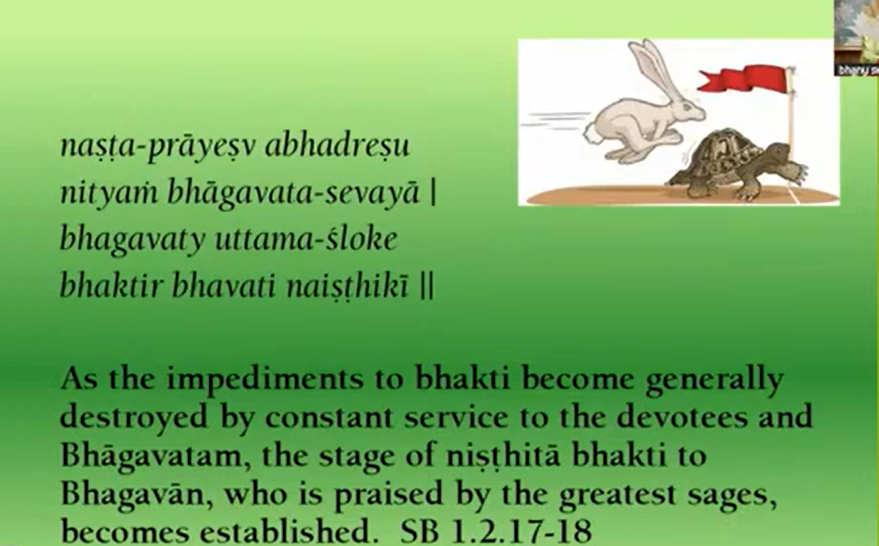
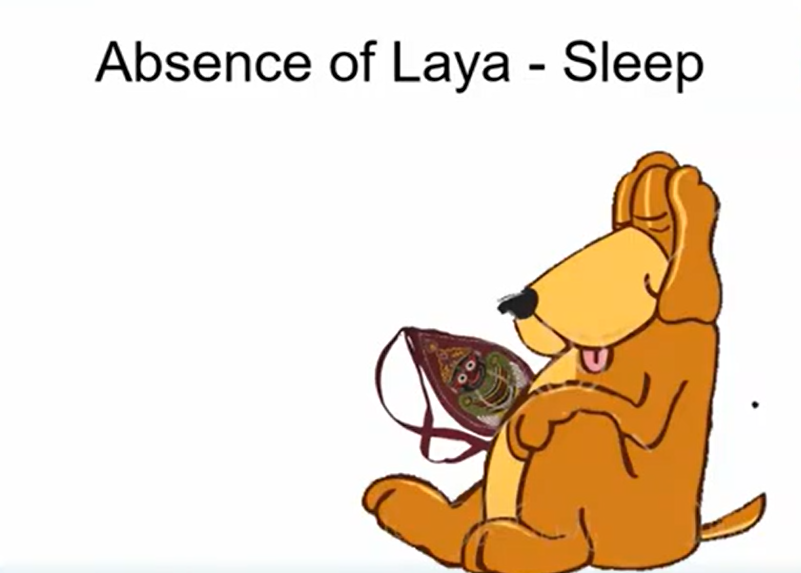
So Vishwanath Chakravarti describes a stage in terms of absence of six qualities. So the first is absence of laya or sleep. So when one is practicing bhakti or hearing and chanting etc, one doesn’t fall asleep. So if there’s absence of this, then this is a sign of nishtha.
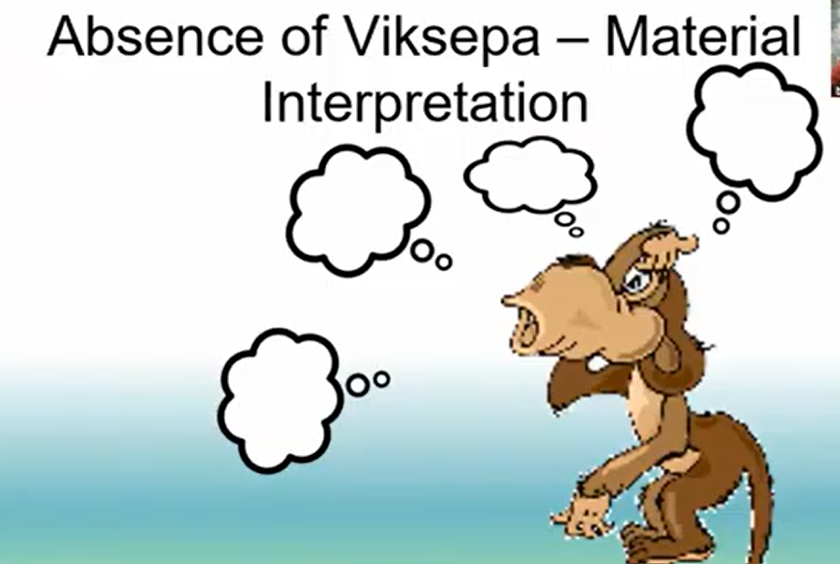
There’s an absence of giving material interpretations to scripture and the name.
There is an absence of indifference. So one may not be sleepy, one may not be distracted in mind, still one is not very eager to chant and hear. So at the stage of nishtha then one is very enthusiastic to do all the different aspects of bhakti.

There’s absence of kashaya which means sinful habits, anger, greed, pride etc.

And there’s absence of material taste.
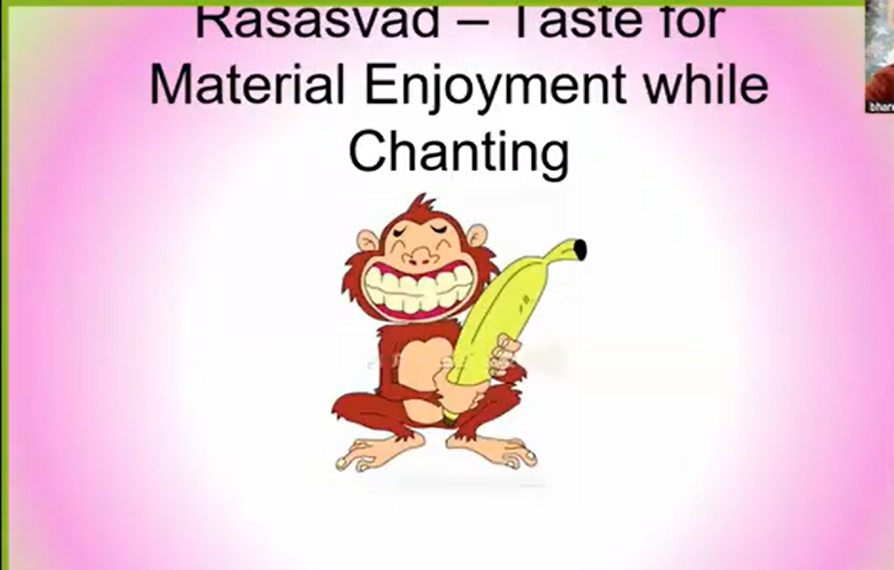
So if these things are absent, then these are signs of being at the stage of nishtha. This does not mean that all anarthas are gone, but they don’t cause problems for execution of bhakti.
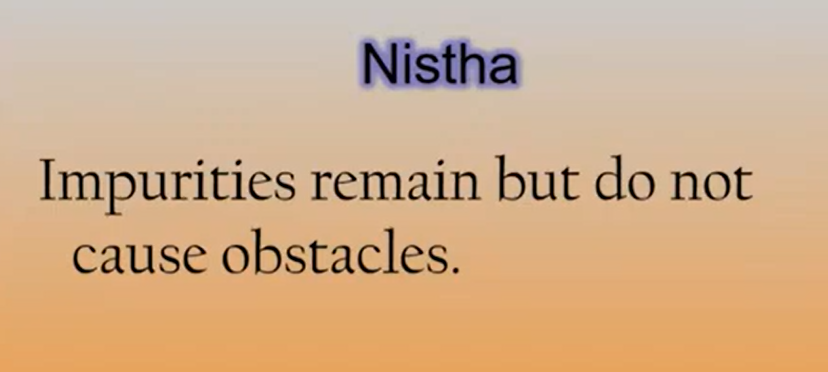
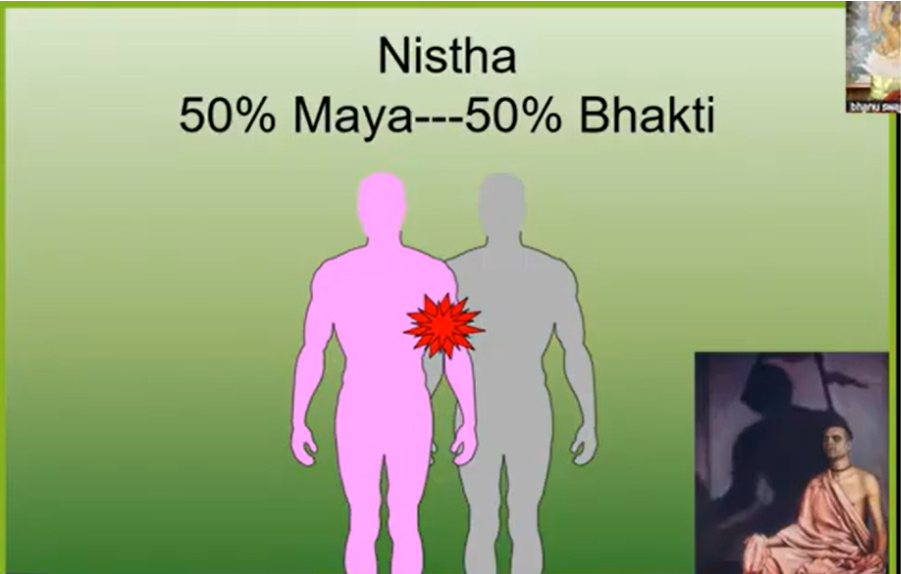
So in the beginning stages of bhakti, there’s a little bhakti and a lot of anarthas and therefore there is unsteadiness. And as one hears and chants and performs other actions of bhakti, the bhakti increases and anarthas begin to decrease. And when the bhakti becomes a little bit stronger than the anarthas, then you can practice bhakti steadily.
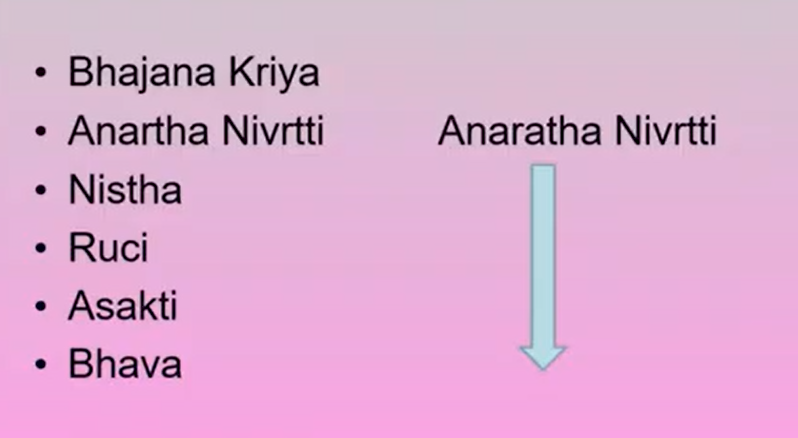
Okay, so of course after this stage, when we go to Ruchi and Asakti and into Bhava, more anarthas are removed.
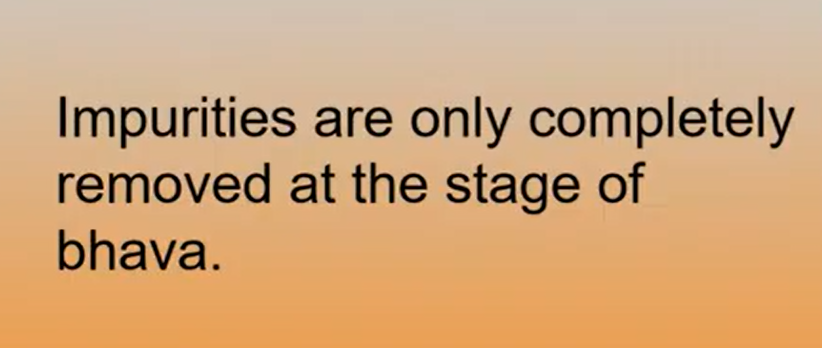
So the last traces of anarthas are removed in Bhava, that makes Prema a perfect state with no anarthas. So throughout the process of bhakti, this anartha nivrutti is taking place. And gradually the bhakti increases.
Vishwanath Chakravarti describes two types of steadiness. You can be steady in bodily activities in bhakti, with the words or with the mind. If we reach this steadiness in bhakti stage of nishtha, we can also perceive steadiness in others.
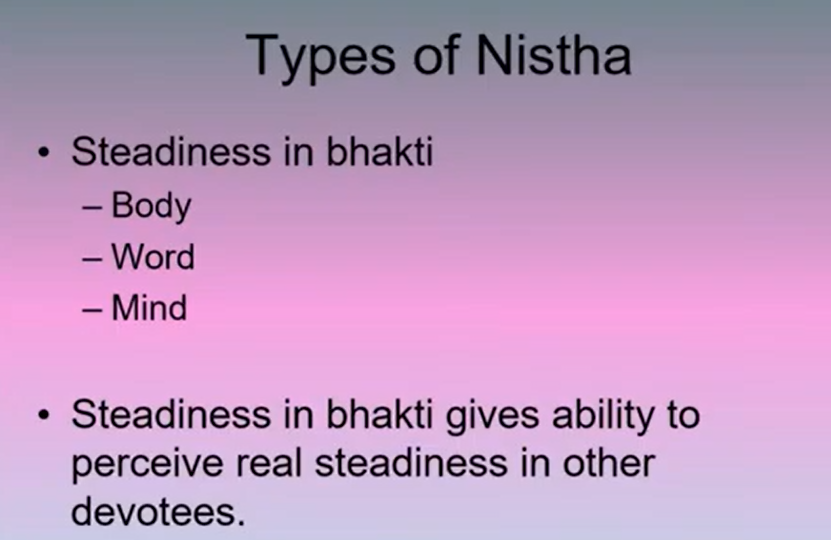
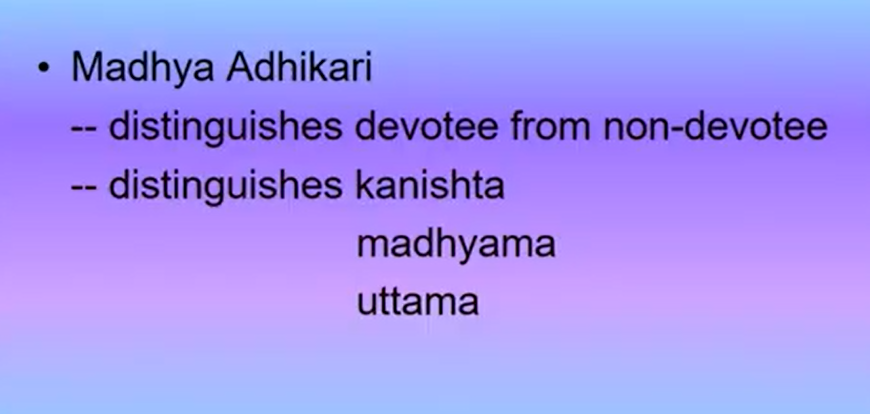
And this fits in with the description of the Madhyama Adhikari. However, steadiness in those qualities is not always a sign of steadiness in bhakti. The Madhyama Adhikari distinguishes devotees from non-devotees. He also distinguishes the Kanistha from Madhyama and Uttama.
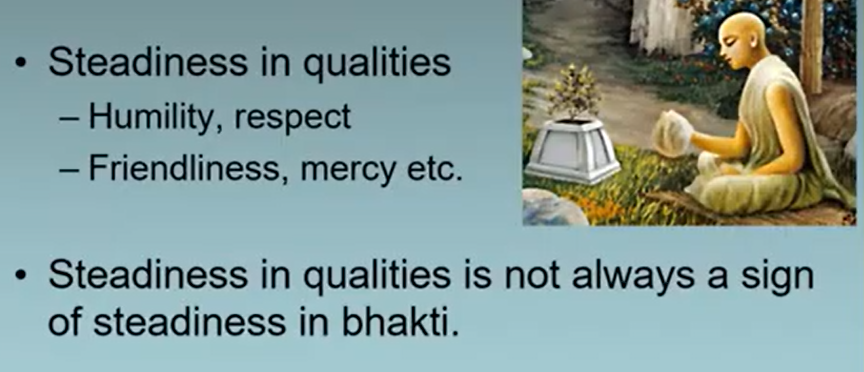
Okay, so one can have steadiness in qualities such as humility, respect, friendliness, mercy etc. However steadiness in those qualities is not always a sign of steadiness in bhakti. And the reason is that, one can have steadiness in certain qualities which are sattvic qualities.
Translator Devotee : Which aren’t or are ?
HH Bhanu Swami Maharaj : Sattvic qualities, hmm.
Translator Devotee : They are or they are not ?
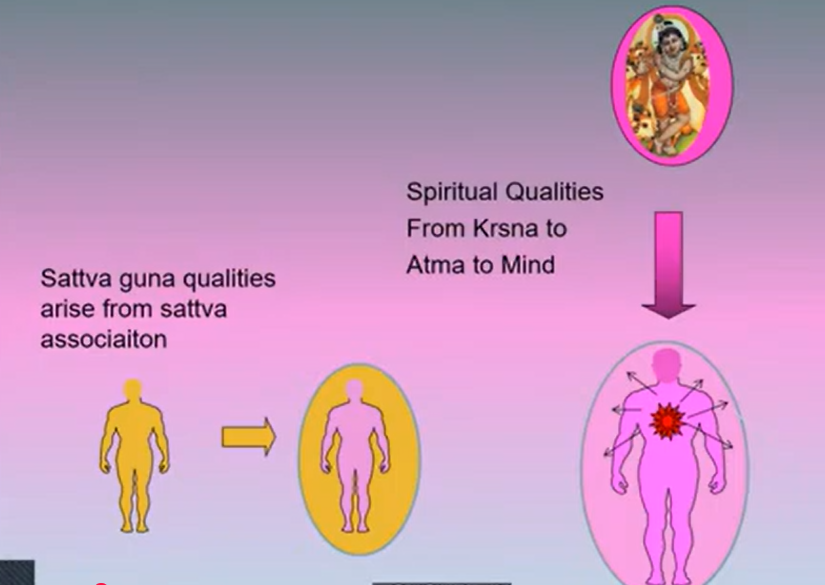
HH Bhanu Swami Maharaj : Yes, we see people, many brahmanas are steady in many nice qualities, sattvic qualities.
Translator Devotee: Okay, yeah.
HH Bhanu Swami Maharaj: But they may not have any bhakti at all [Laughs]. So when we talk about qualities in bhakti, those are spiritual qualities, they will naturally develop as the devotee progresses.
So from nishtha, when the bhakti becomes stronger and the anarthas becomes less, we get ruchi.

From nishtha, when the bhakti becomes stronger and the anarthas becomes less, we get ruchi. So one has a great taste for the activities of bhakti, such as hearing and chanting. The anarthas are much less, so one has less interest in material enjoyment.
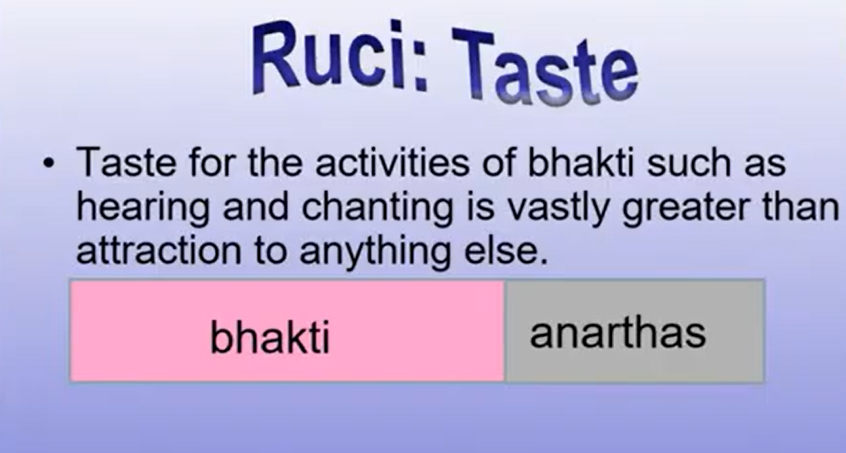
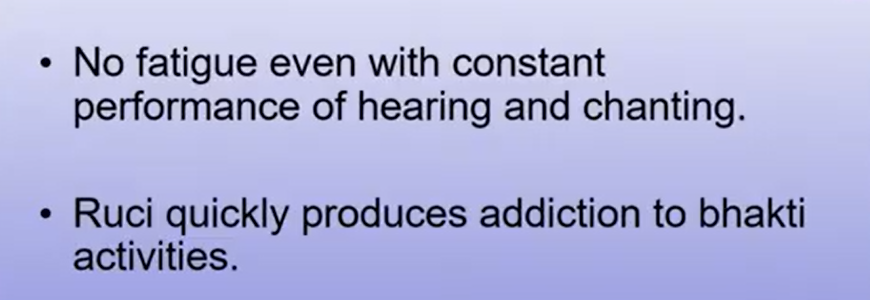
So one does not experience fatigue or tiredness, when one does hearing and chanting. And when we have that ruchi, one becomes more addicted or more attracted to the activities of bhakti.
So in the material world, if we have jaundice, the effect of the liver, we cannot taste sugar. Of course we can taste it, but it tastes bitter, not sweet [Laughs]. So similarly, we do the activities of bhakti, hearing and chanting, but they’re difficult to do, because they’re not so enjoyable. So the cure for jaundice is sugar, even though it doesn’t taste nice [Laughs].

So if we are diseased with our intelligence, we will understand we should take the sugar even though it doesn’t taste good and then gradually we develop taste, we get cured and we can taste the sweetness.

So in the same way, gradually by performing hearing and chanting, we get cured of material disease, and we begin to taste and relish hearing and chanting.

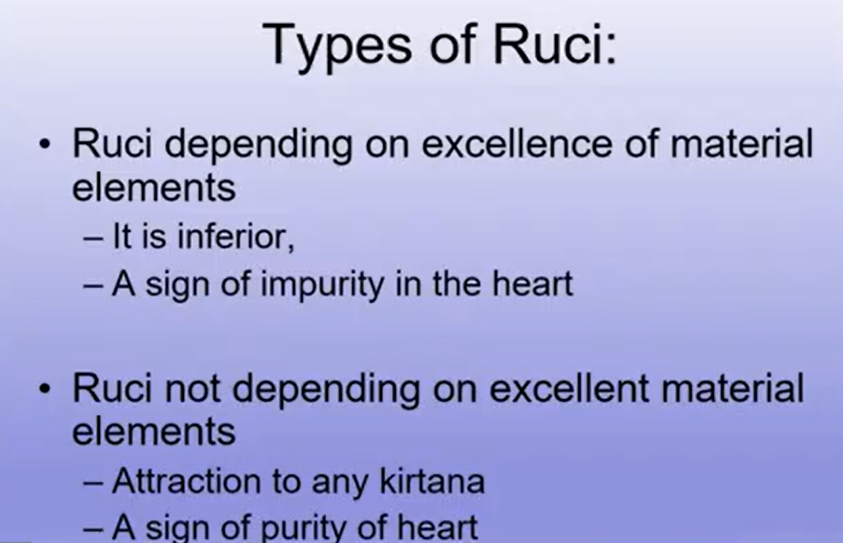
There are two types of ruchi. One may be attracted and have a taste for kirtan, if nice music is there, nice tunes are there [Laughs]. So this is one type of ruchi, but it’s inferior. Real ruchi doesn’t depend on material conditions. So the devotee will be attracted to kirtan, whether it is musical or not musical [Laughs].
At the stage of ruchi, that devotee will lament his previous condition, where he had anarthas. He’s always hearing and chanting in association with the devotees. Because he has great attraction for devotional activities, he becomes very disgusted with material activities.
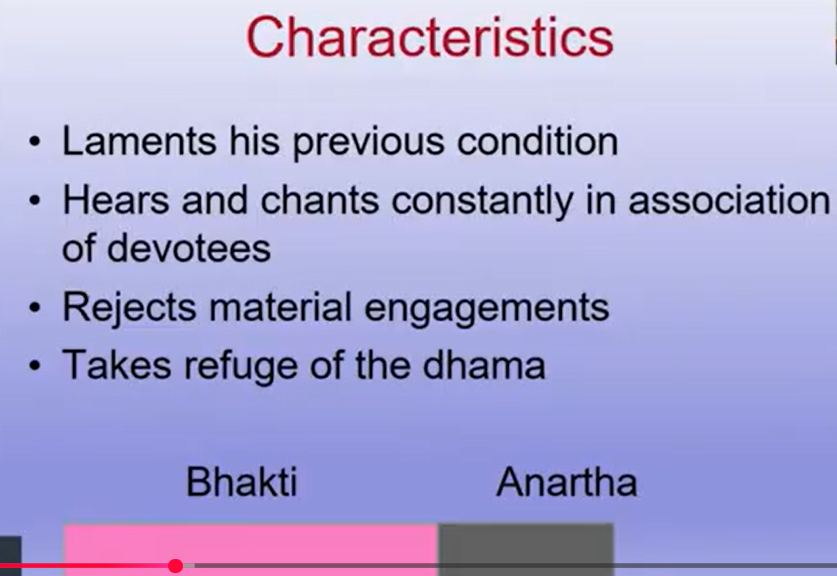
He may retire to the holy dham to perform his bhakti [Laughs].
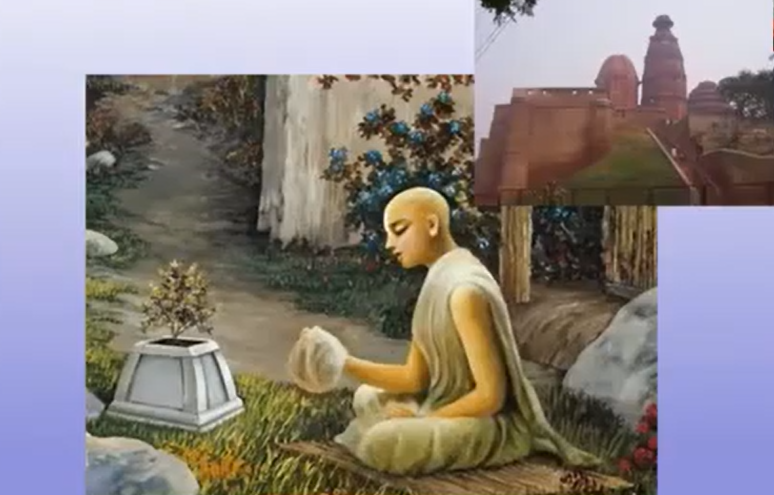
So as the bhakti increases and the anarthas decrease, one comes to the stage of asakti or attachment.

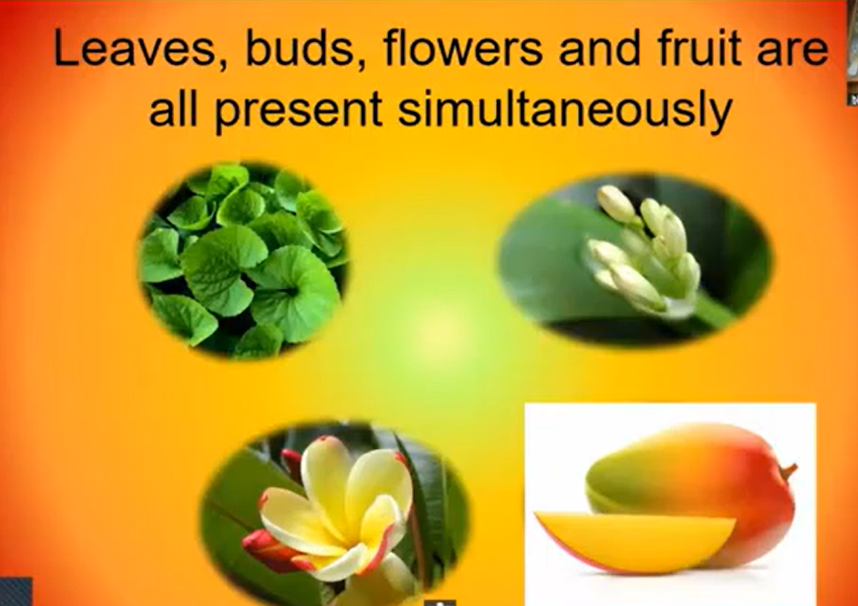
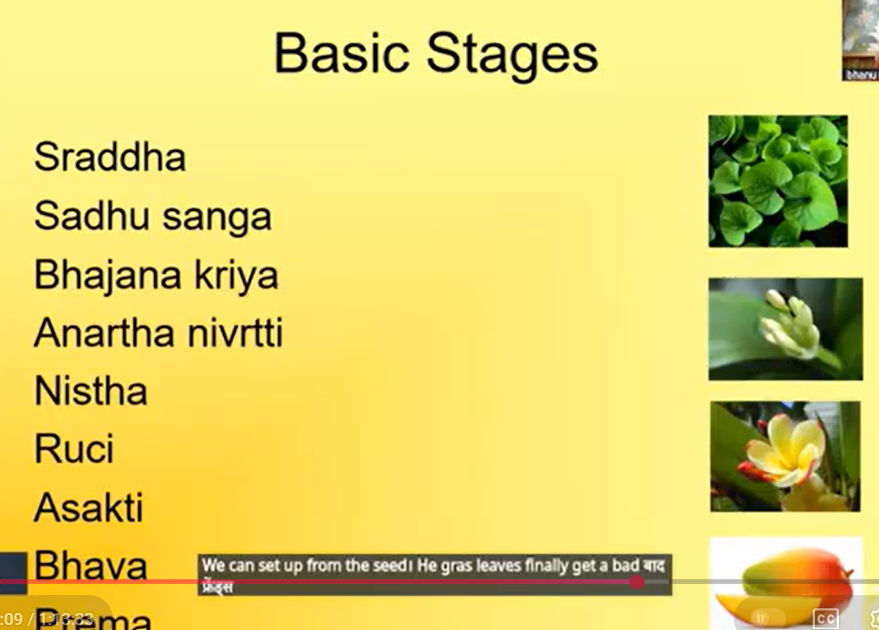
In Nectar of devotion, bhakti was described as a little plant, and it grows leaves. The plant grows bigger, and then flower buds begin to appear. So, the stage of asakti is compared to the buds on the bhakti plant.
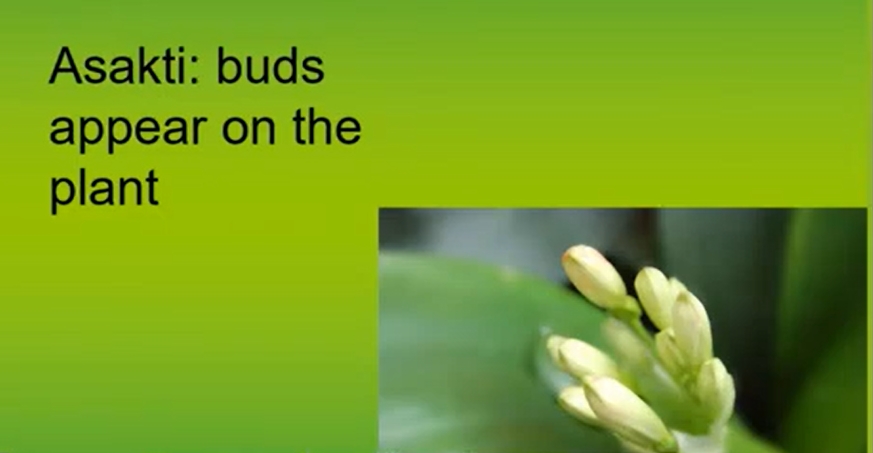
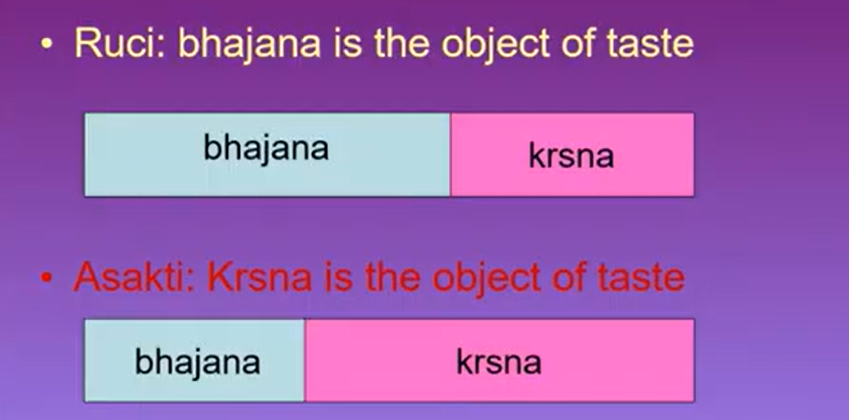
So at the stage of ruchi, one is attracted to the hearing and chanting. And if one comes to asakti, one is attracted to Krishna, who is the object of your hearing and chanting.
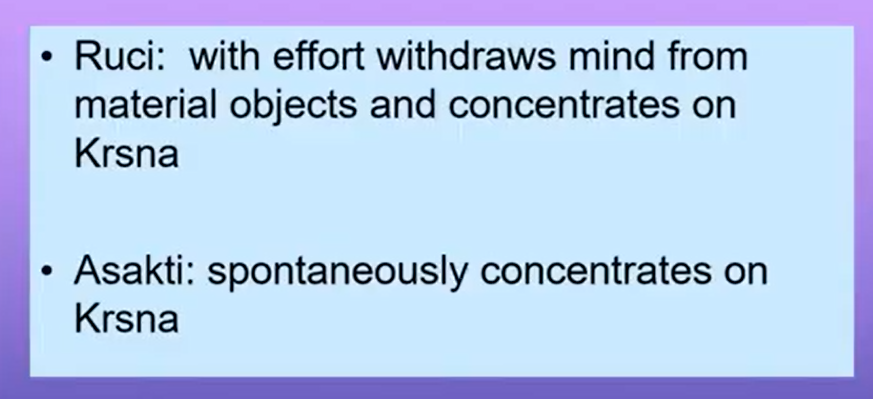
Near Ruchi stage, you still have to make efforts to withdraw the mind from material objects, etc. At the stage of Asakti, no effort is required. One very spontaneously is attracted to Krishna.
At this stage, Krishna almost appears [Laughs]. A reflection of Krishna appears in the heart.

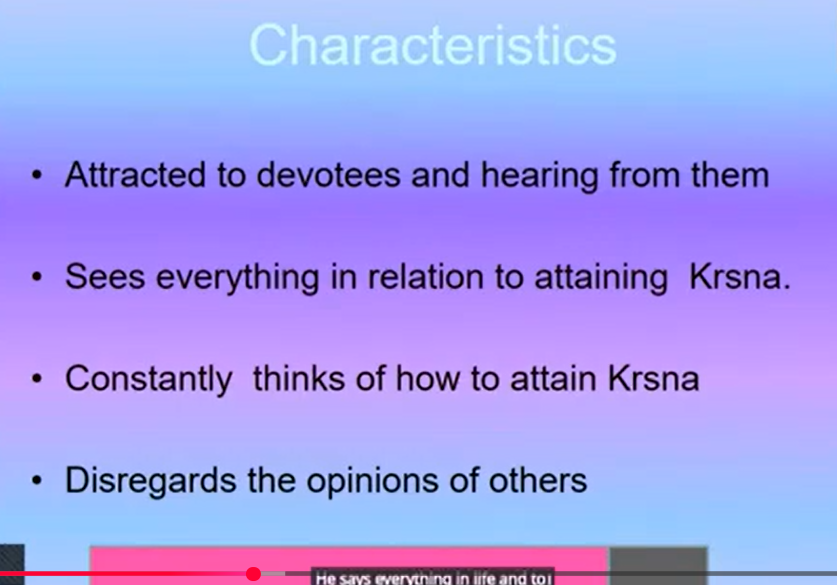
What is the characteristic of this devotee? He is attracted to devotees. He is attracted to hearing from devotees. He sees everything in relation to and how to attain Krishna. He disregards the opinions of others. So he may appear to be very strange in his behavior. But he doesn’t mind what others say.
He wants just to get closer and closer to Krishna [Laughs]. But at the end of Asakti, actually the anarthas due to karma are all gone.
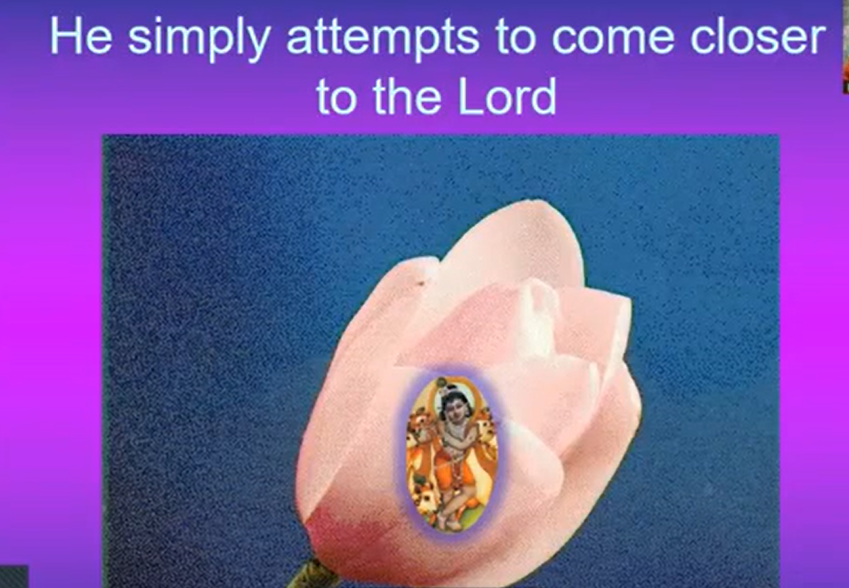
So, from asakti one goes to the stage of Bhava.
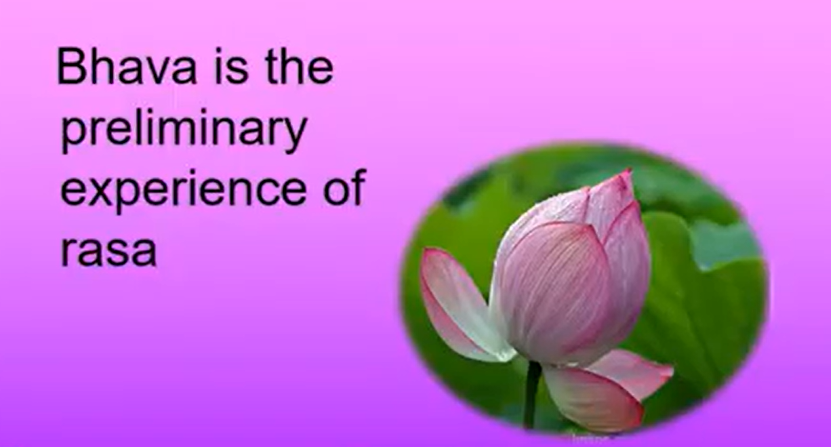
Asakti is like the bud of a flower. Bhava is like the flower blossoming [Laughs].
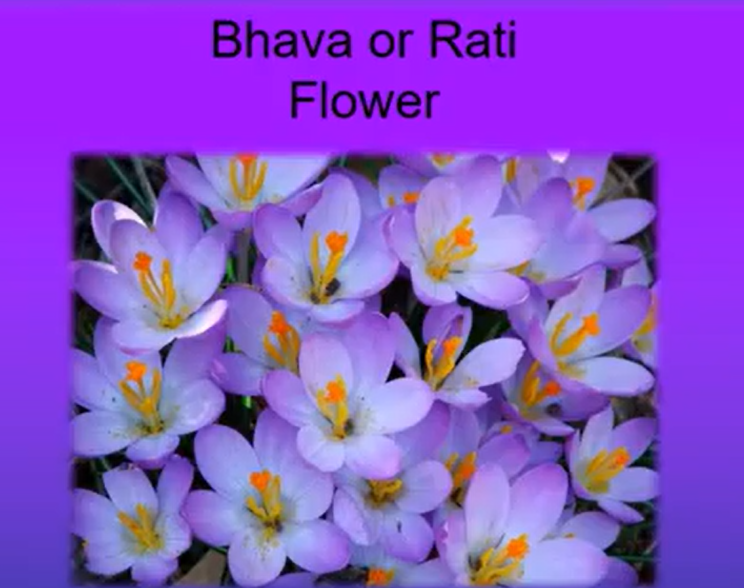
In the Bhava stage, there is the first appearance of Krishna.
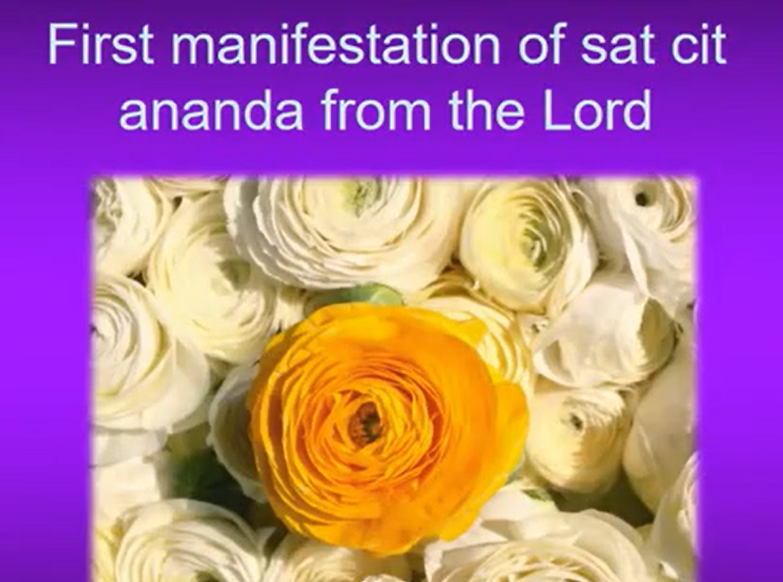
So asakti was like a reflection of Krishna, here we actually have Krishna appearing.
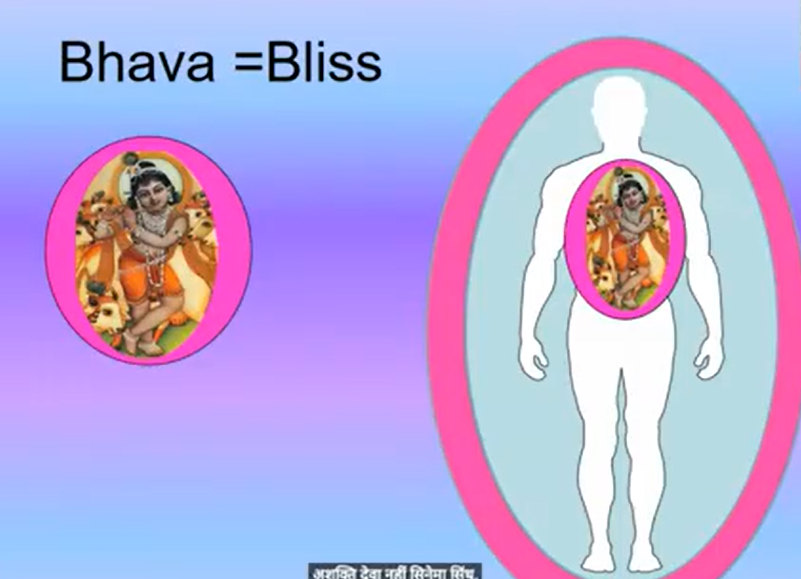
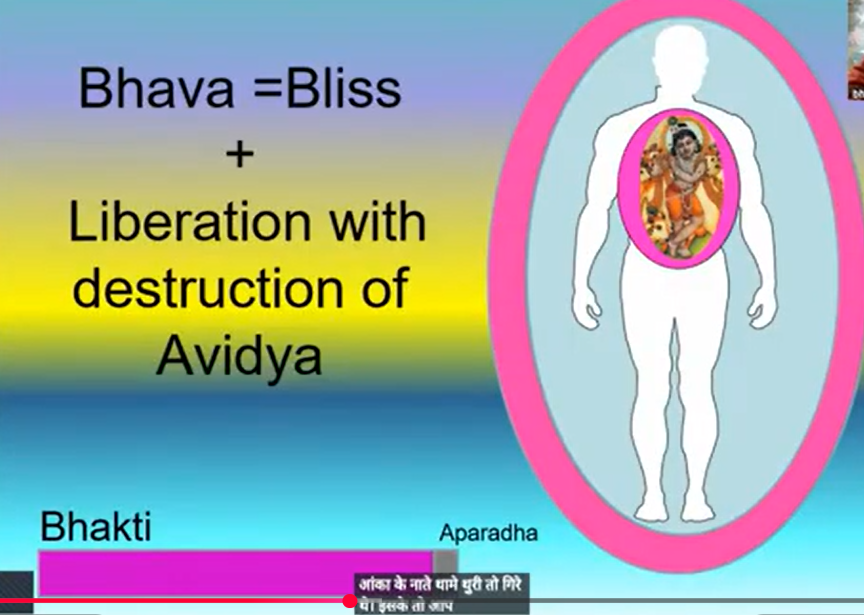
So with just a drop of Bhava, then ignorance is completely destroyed.
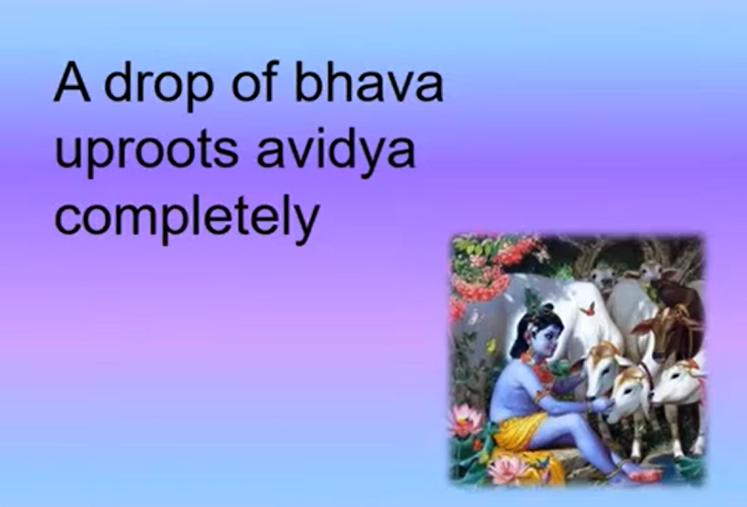
Previously, we described how suffering was all from karmas. Karmas came from actions. Actions came from all these raga, dvesha, etc. ahankara and finally, the very cause of everything was ignorance or avidya. So in avidya, then the very root of all of our problems in the world is ignorance is destroyed in Bhava.
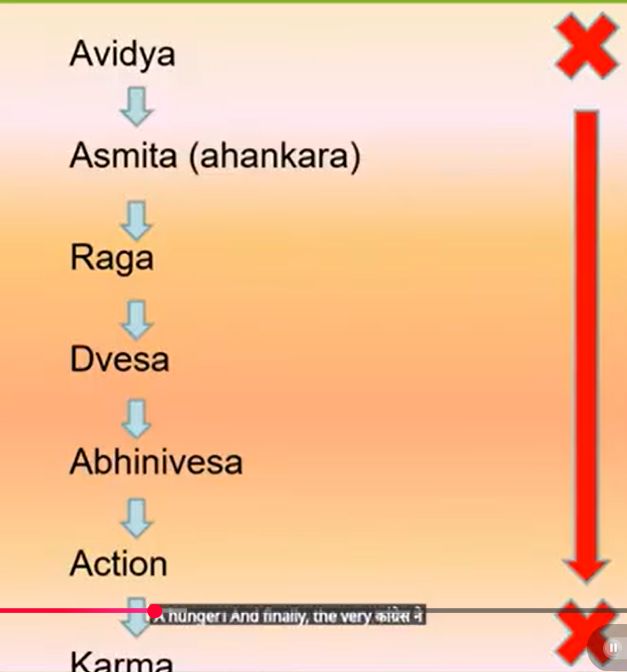
In Sadhana Bhakti, we get the beginning of destruction of karmas etc, kleshagni. And we get some manifestation of good spiritual qualities. In Bhava stage, the devotee is able to see Krishna. This is something which is very rare. The Jnani’s and Yogis and Karmis cannot see Krishna at all, no matter what they do. Because the devotee sees Krishna and serves Krishna, the idea of liberation becomes very insignificant. so Jnanis and Yogis strive for liberation, that’s their goal but a devotee in Bhava rejects that completely.
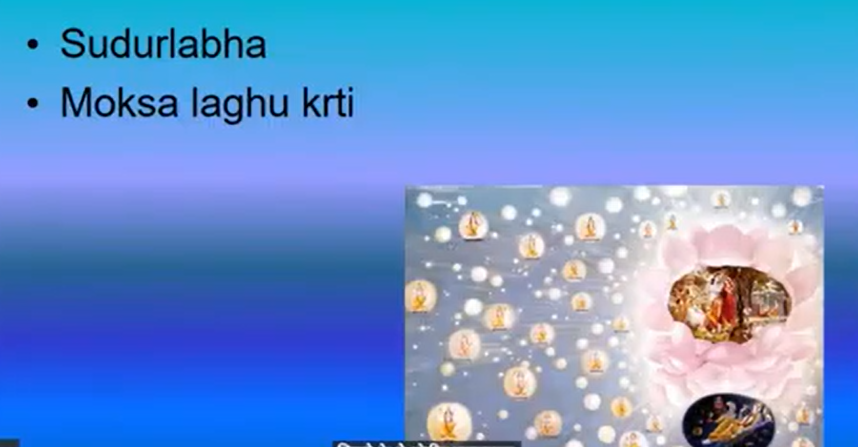
In Bhava stage, the devotee experiences bliss in a relationship with the Supreme Lord, and consequently liberation becomes useless [Laughs].
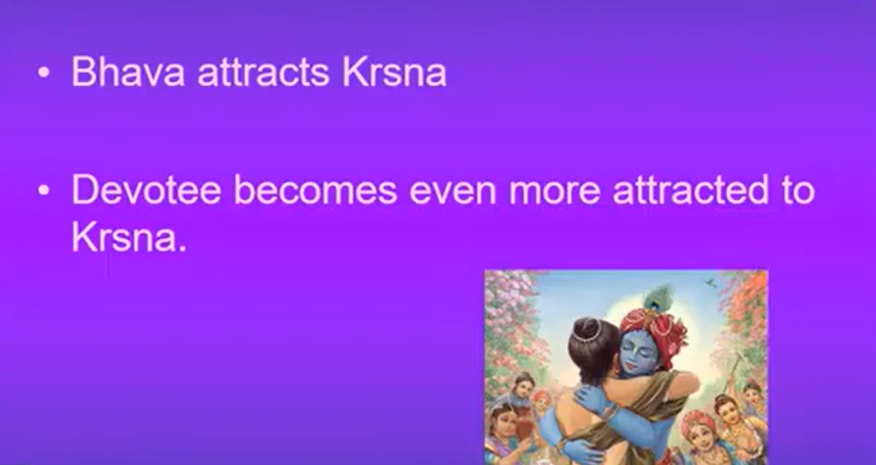
In this stage, Bhava is very attractive to Krishna. So Krishna appears before the devotee. And the devotee becomes more attracted to Krishna.
So at this stage, because he’s able to see Krishna, he must have spiritual eyes. So actually, he develops a spiritual body and all spiritual senses also develop, so he can see, smell, hear, touch and taste.

Of course, we should not think that somehow he creates a body, because if it’s a spiritual body, it cannot be created, it’s eternal [Laughs]. So eternal spiritual body manifests in the Jiva at this point.
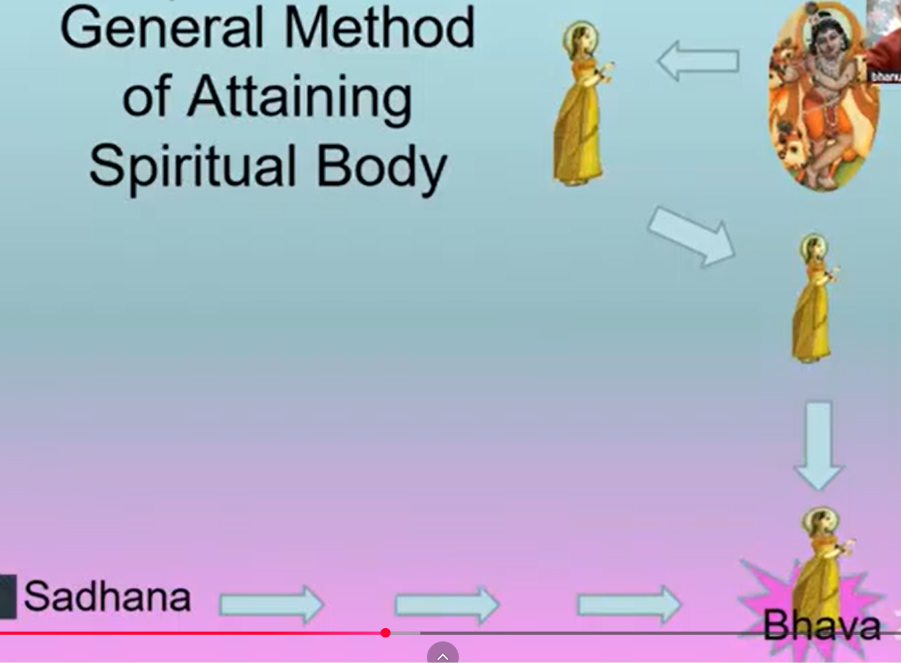
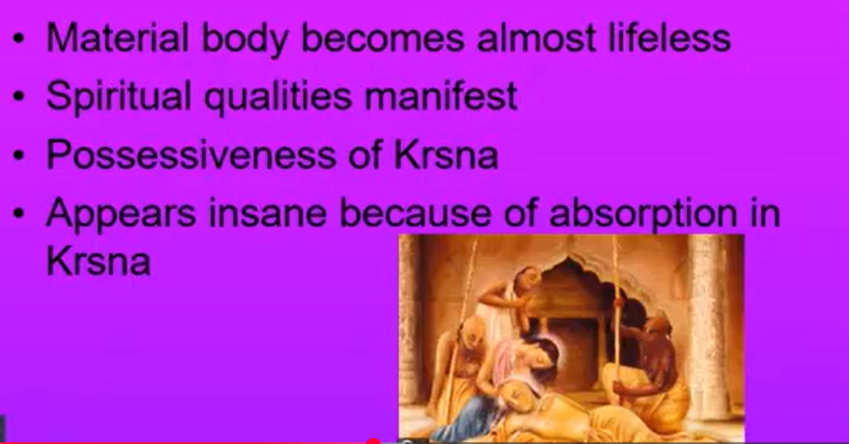
So because he is operating spiritual body, his material body is almost lifeless. Spiritual qualities manifest strongly. He becomes very possessive of Krishna. Because he’s absorbed in Krishna, for a materialist, he looks like he is insane.
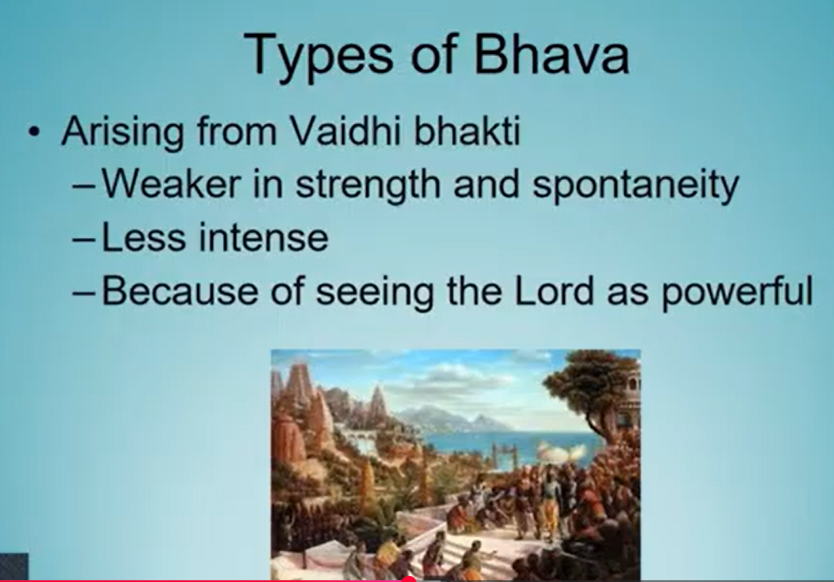
If one practices Vaidhi Sadhana Bhakti, one can develop Bhava. But it’s a little weak and not spontaneous. The reason for this is, one sees the Lord as a powerful figure.
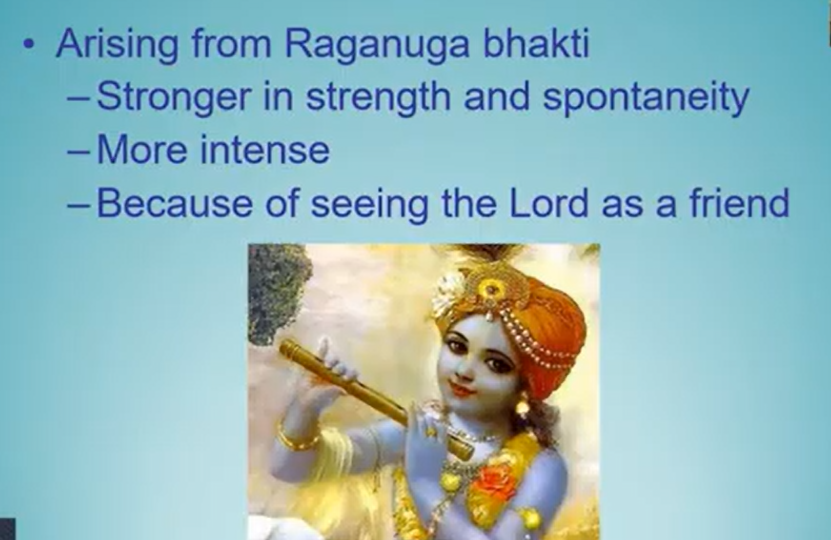
If one performs Raghanuga Sadhana Bhakti, then that Bhava is very strong and spontaneous. One does not see Krishna as a powerful Lord, but simply as a friend.
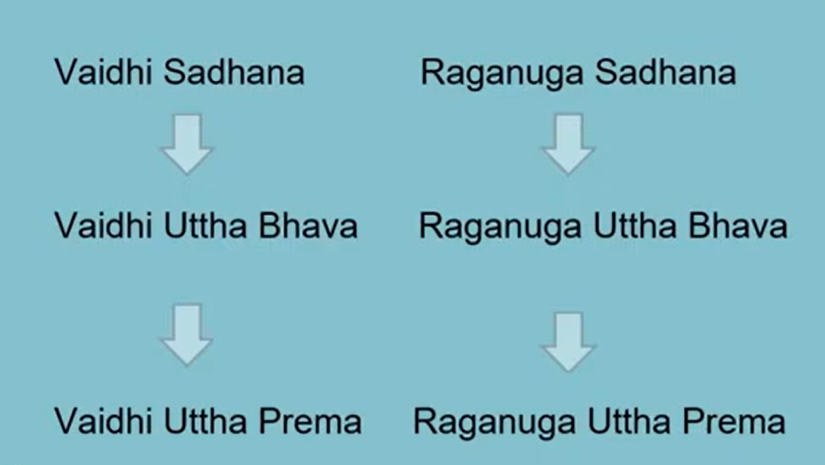
So, from Vaidhi Sadhana, you can get to Bhava and Prema, but your realization of Krishna is a little different [Laughs].
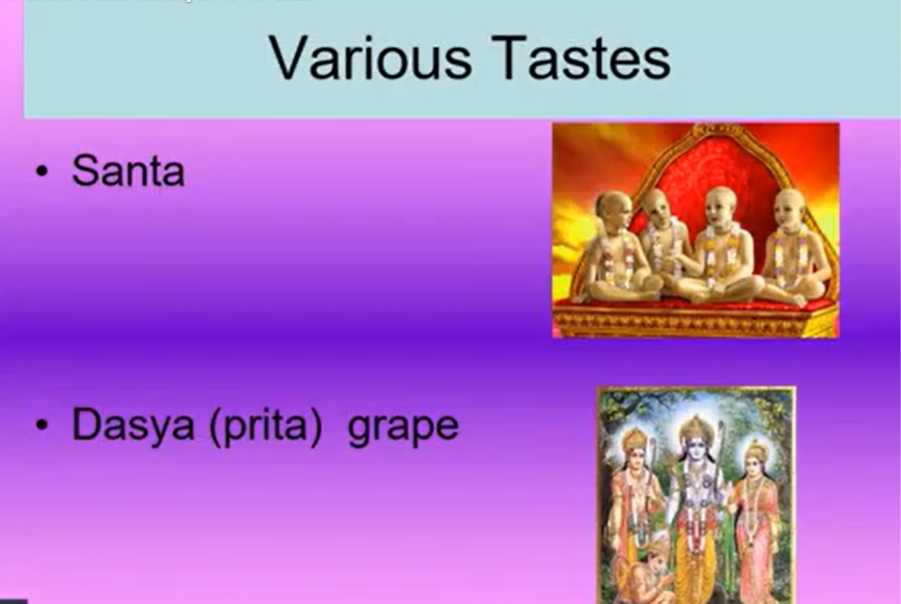
In relation to Krishna, then at the Bhava stage, one can have various tastes. They can be Santa, or Dasya, Sakhya, Vatsalya, Madhurya. So this acting as a servant is compared to
to a grape juice.
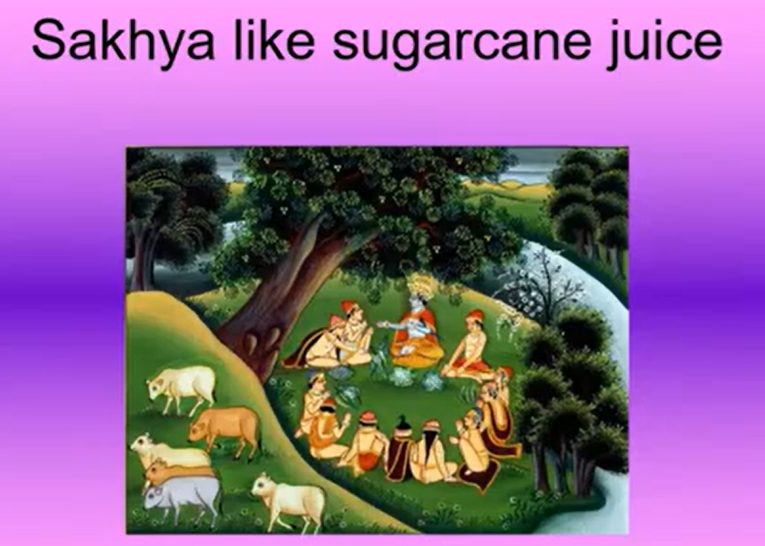
Acting as a friend is like sugar cane juice.
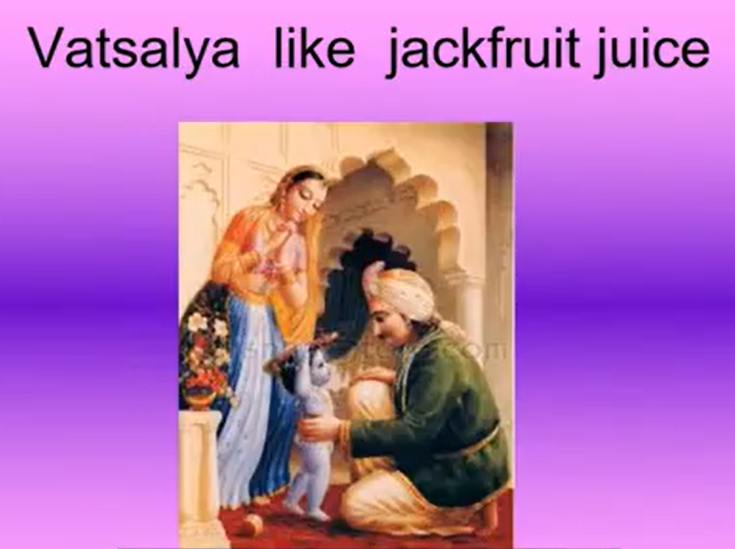
If one has Vatsalya, it is like jackfruit juice [Laughs].
Devotee : Oh, I wonder what taste that is.
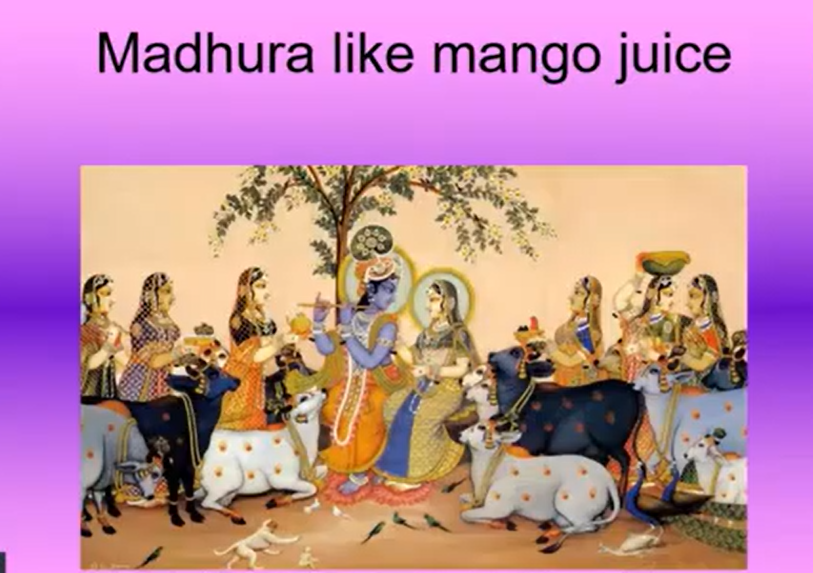
HH Bhanu Swami Maharaj : [Laughs] And if you have a taste for Madhurya – conjugal rasa, it is like mango juice [Laughs].
So, Bhava actually means Sthayi Bhava. That’s this relationship, Santa, Dasya, Sakya, Vatsalya, Madhurya. This is combined with these other elements, Vibhava , Sattvika Bhava , Anubhava, and Vyabhacari Bhava .
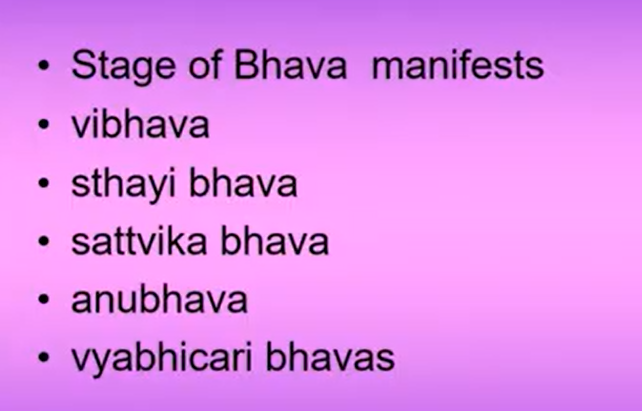
In order to have the Sthayi Baba, that’s emotional relationship, you have to have a devotee and Krishna. Two people have to be there [Laughs]. That’s the Vibhava [Laughs]. So, once we have the devotee and Krishna, and we have the Sthayi Bhava established, then we will have ecstatic symptoms called Sattvika Bhavas. The devotee will manifest Anu bhavas, these are various activities or service. And there will be some minor emotions like doubt or fear etc, jealously, that’s temporary manifestation that is called Vyabhacari bhava and these all combine together, and that produces rasa.
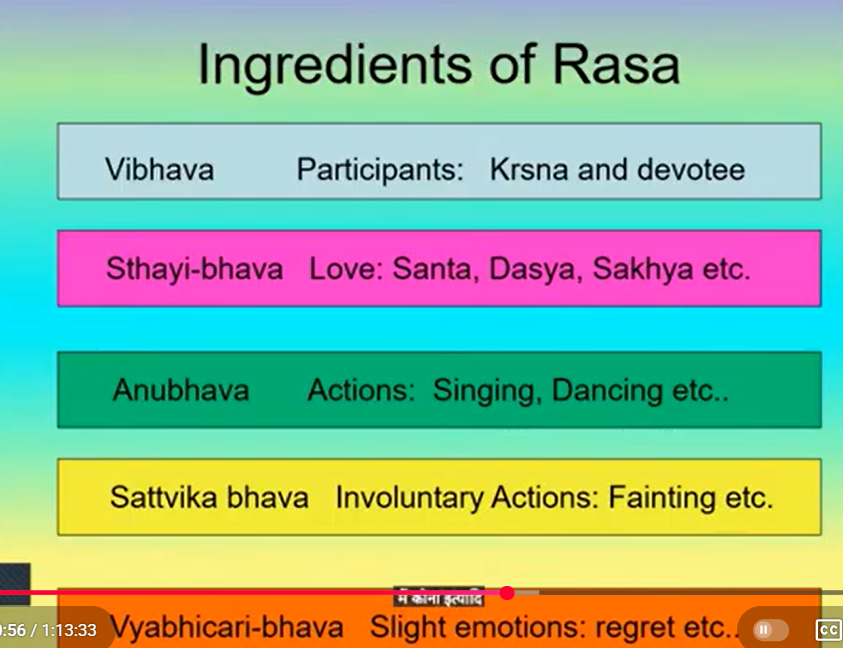
And that rasa is expressed in Santa, Dasya, Sakhya, Vatsalya, or Madhurya.
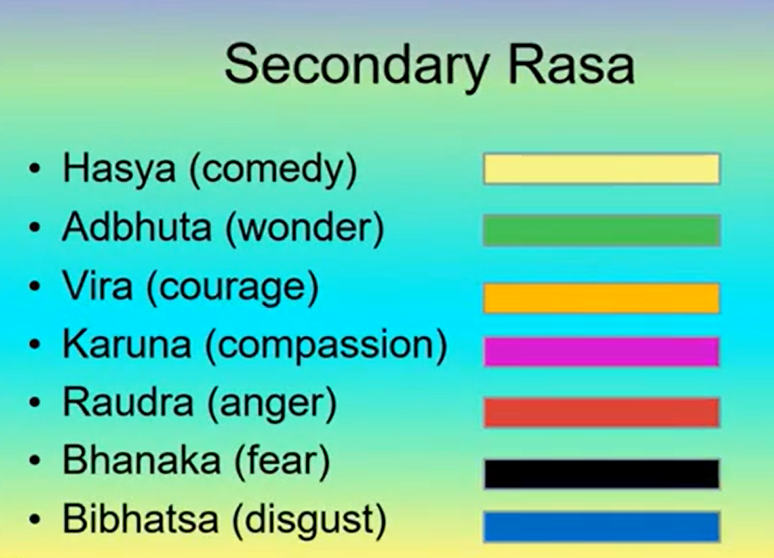
So we have the five primary rasas.
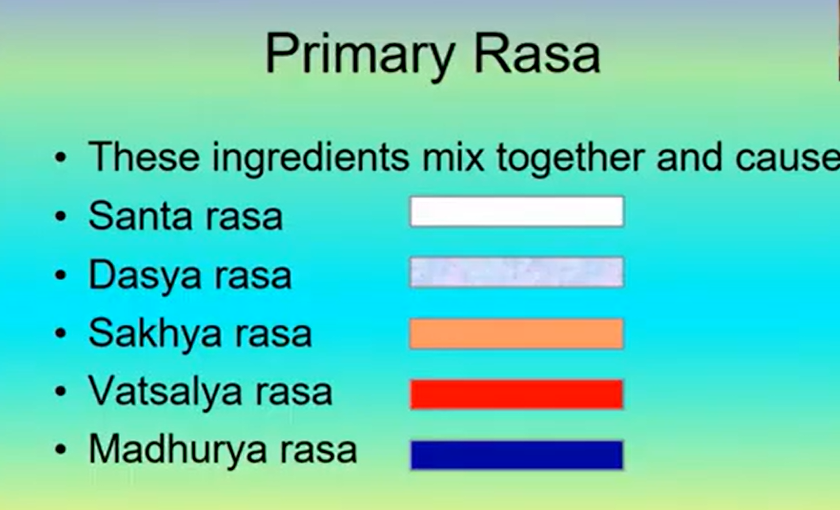
And depending on them, we have some secondary rasas.
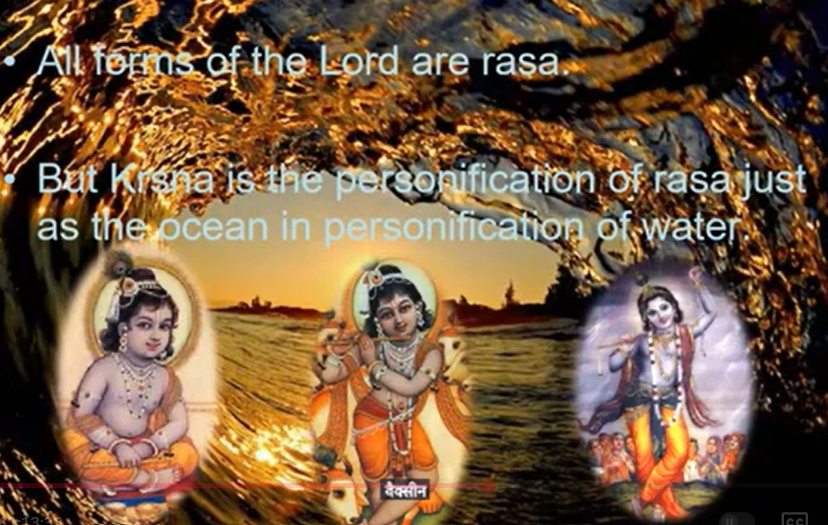
So the Lord has many forms, but they are all rasas. But Krishna is the personification of rasa [Laughs], because he manifests all rasas fully.
So, Bhava is like the first experience of rasa, not fully developed.
So then, that Bhava turns into Prema.
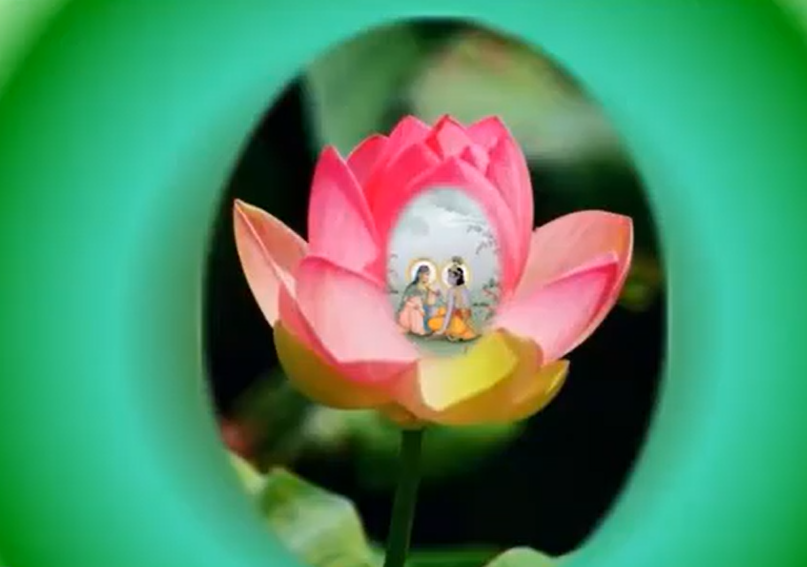
And Prema is like the fruit that manifests after the flower.
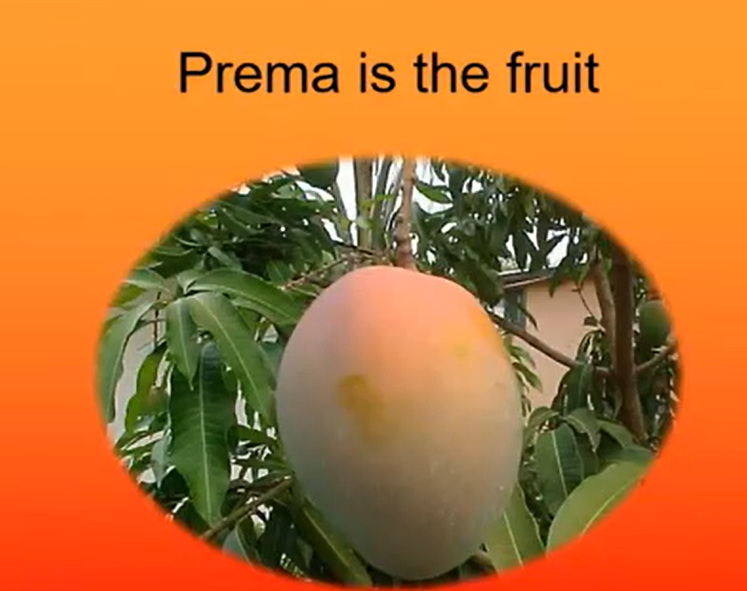
But when that fruit develops, the flowers remain, the buds remain, the leaves remain, everything remains [Laughs].
Okay, so in that state of Prema, there is not just bliss, as in Bhava there is bliss. This is concentrated bliss, intense bliss. Krishna is attracted to any type of bhakti, but he is most attracted to Prema bhakti. So, in Bhava stage, there is possessiveness of Krishna. In Prema, there is intense possessiveness of Krishna. And there is a greed for Krishna, which will overcome any obstacle. If Krishna appears for a moment, then the greed increases.
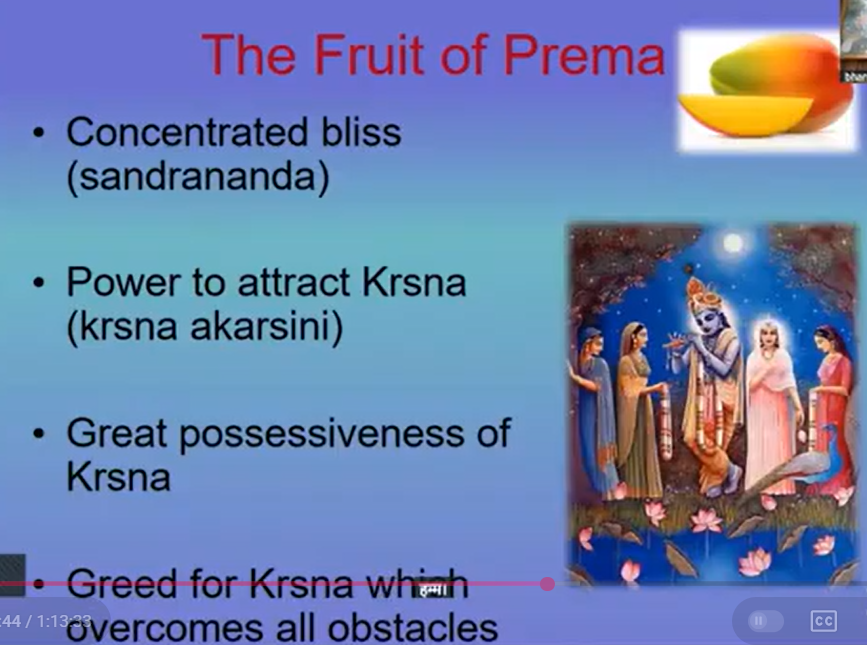
One has a longing for Krishna, and longing for Krishna to bestow bliss.
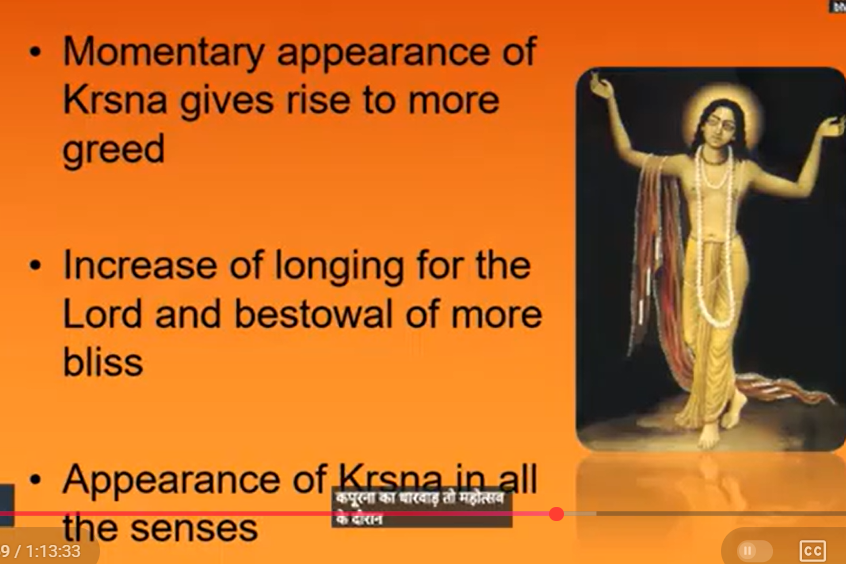
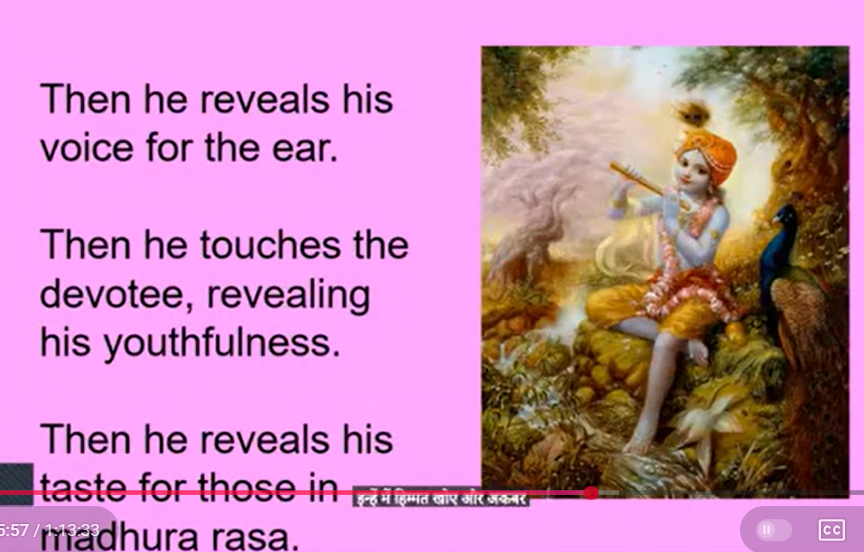
So, in Prema, Krishna appears in all the senses. He reveals his form to the eyes. He reveals his fragrance to the nose. He reveals his voice to the ear.
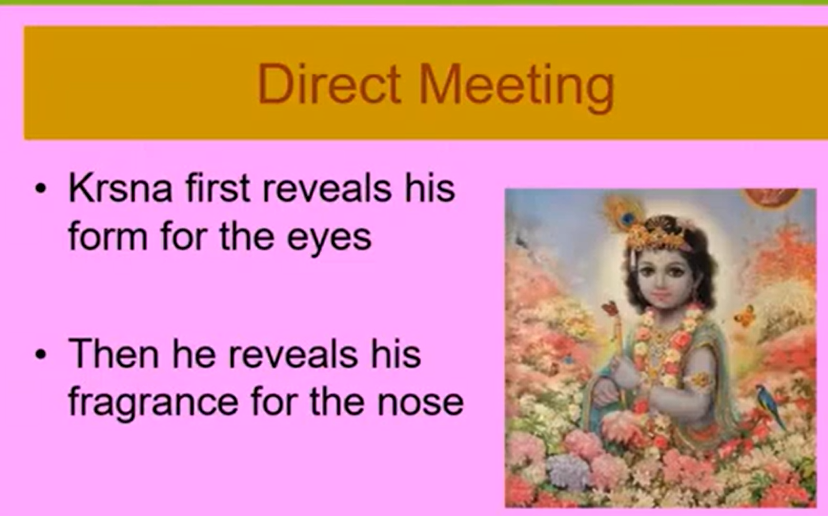
Then he touches the devotee [Laughs]. And he reveals taste to those in Madhurya Rasa.
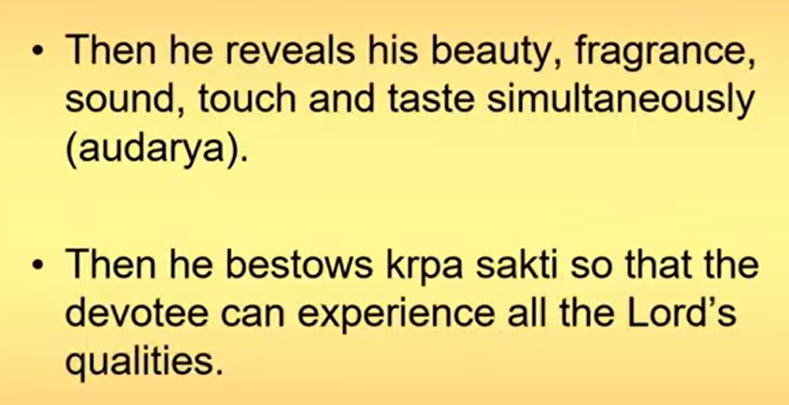
Then he reveals his beauty, fragrance, sound, touch, taste, everything simultaneously to all the senses at once. And then he bestows his Kripa Shakti, Shakti of Mercy, so the devotee can experience everything simultaneously.
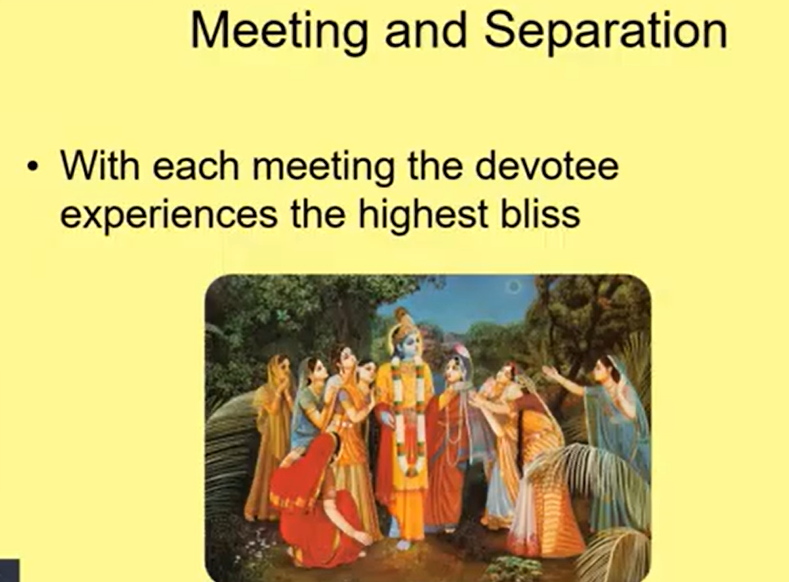
So, in Prema, there are two phases, meeting and separation. When Krishna meets the devotee, then the devotee experiences the highest bliss. And when Krishna separates himself from the devotee, the devotee feels the greatest pain.
So, in the material world, the devotee has his body, but simultaneously he is experiencing Krishna in his spiritual body. And the devotee is not really aware of his material body at all. So, finally, he gives up the material body completely and enters into the spiritual world with his spiritual body.
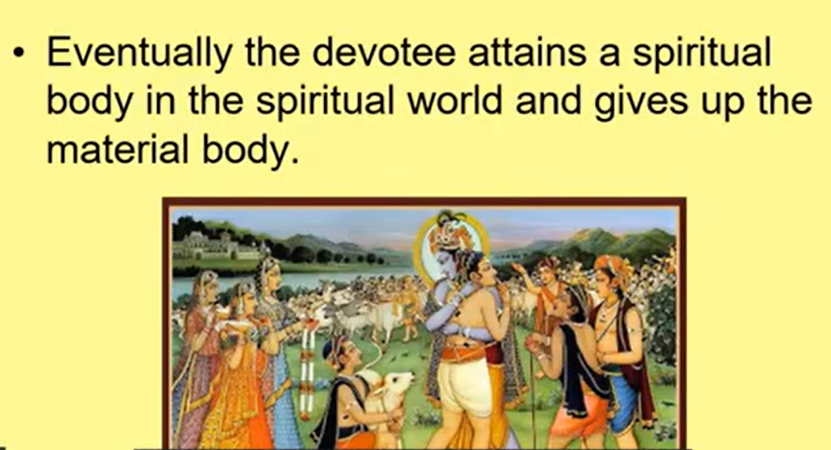
So, the different stages of bhakti have been described.
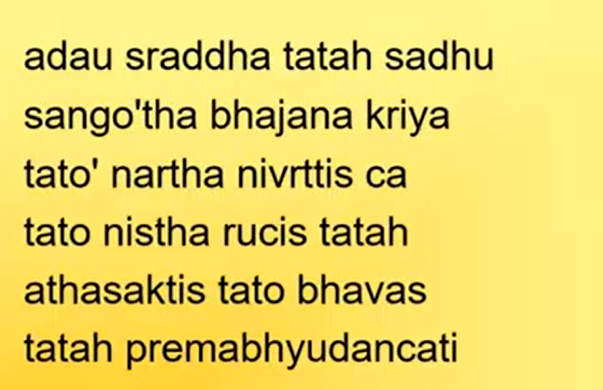
Okay [Laughs], yes. So we go through the different stages of bhakti, but the plant begins to develop from the seed, it develops leaves. Finally, we get a bud, the bud turns into a flower, the flower turns into fruit. So, bhakti grows within the Jiva, just like a plant.
When one gets to prema, in the spiritual world, there is further stages that manifest. When prema becomes condensed or thick and melts the heart, it’s called sneha. When there is some contrary feelings like anger and pride that is called Maan.
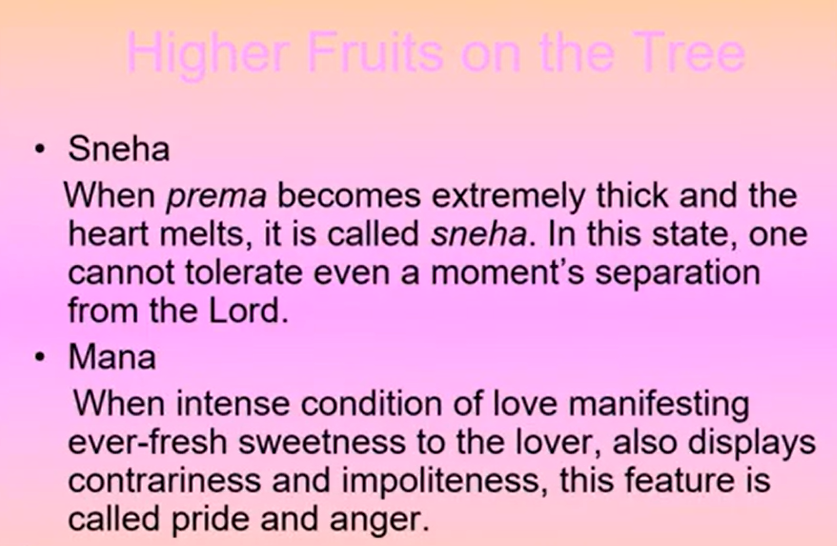
When there is great affection, so there is no longer any sense of respect, that’s called pranaya. That is quite prominent in Sakhya rasa where their friends they don’t have any respect [Laughs]. When sneha turns sorrow into happiness when Krishna appears, it is called raga.
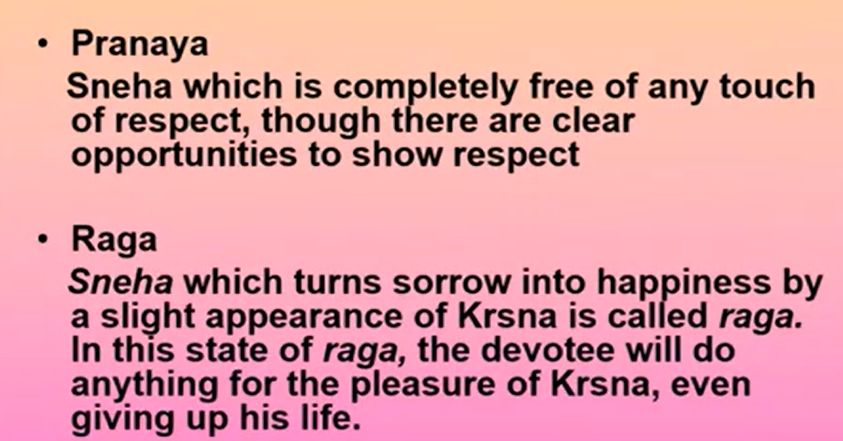
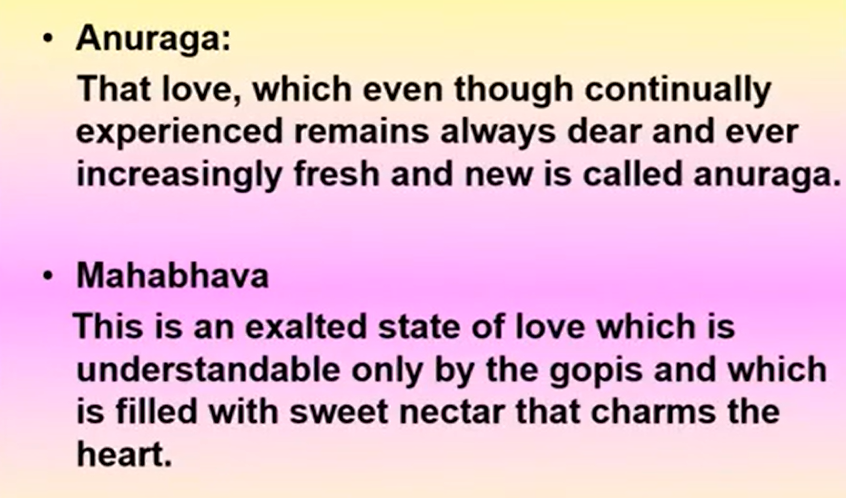
Then Anuraga, which appears in Madhurya rasa, is even more intense. And that love, every time one experiences, it becomes newer and newer. The highest type of prema is maha bhava. And this is only experienced by the Gopis in Vrindavan.
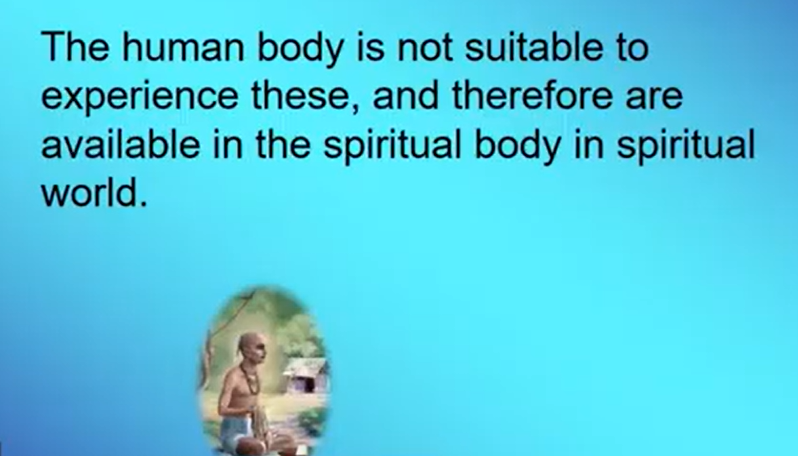
Okay so we have various stages of intensity [Laughs]. So this material human body cannot experience all of this nicely. So therefore, only when you go to the spiritual world do you get these later stages.
So at the end of this work, Vishwananth Chakravarti analyzes possessiveness. But in the material world, possessiveness is a bad quality. I and mine as a result of ahankara. This produces bondage in the material world. So Yogis and Jnanis want to destroy ahankara to get liberation.
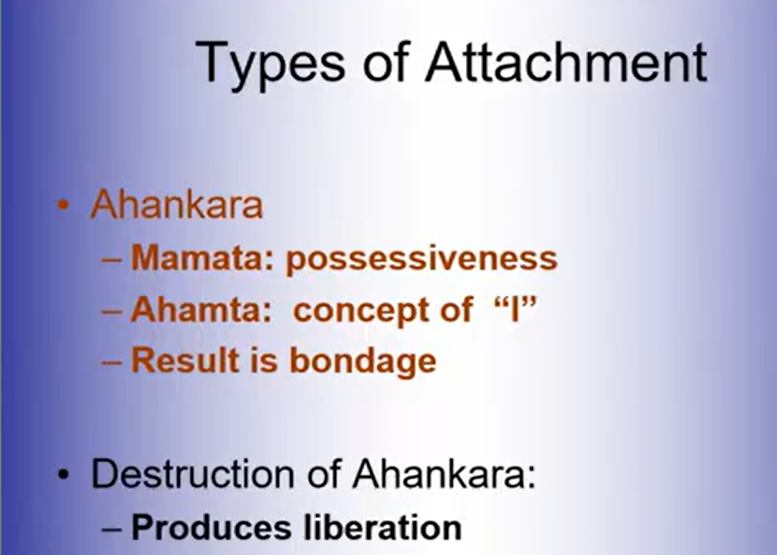
However, apart from that material ahankara, there is a spiritual ahankara in the Jiva. So there is a spirtiual ‘I’. So we say I’m the servant of Krishna. And the devotee has possessiveness of Krishna [Laughs]. So that I and mine in spiritual life is a positive feature, it produces prema.
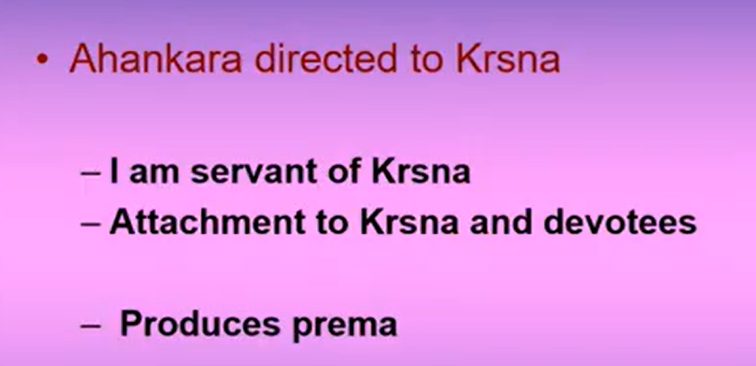
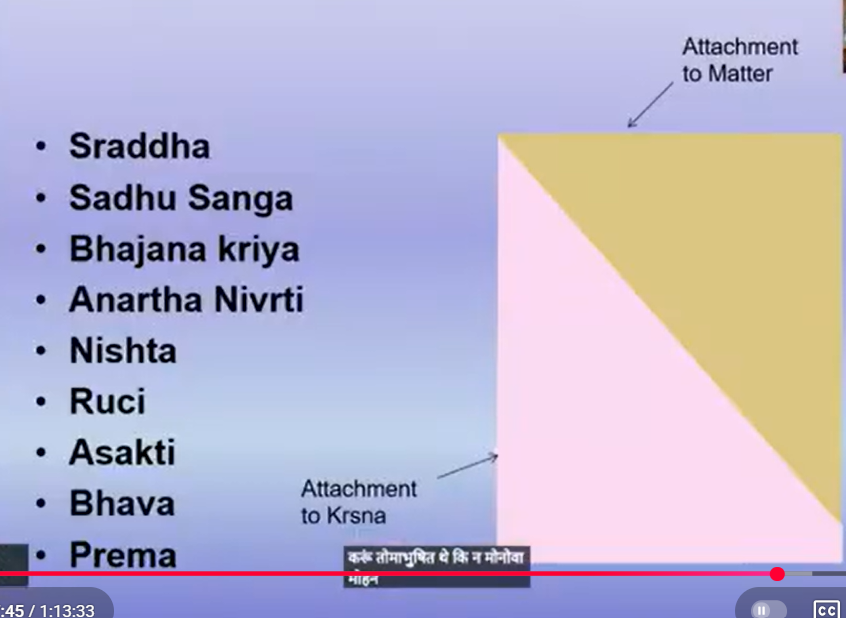
So as we go through the different stages from sraddha to prema, then gradually the material possessiveness and ahankara get weaker and weaker and weaker and the identification I’m the servant of Krishna gets stronger and stronger and stronger. So when we begin bhakti with sraddha, etc, attachment to matter and ahankara is very strong. But as we go into bhajana kriya and anartha nivrutti, gradually attraction to matter and ahankara become weaker and weaker. And gradually the attraction to Krishna, possessiveness of Krishna becomes stronger and stronger. So we reach this stage of Bhava , the identification with the material body, etc, is very very slight and attraction to Krishna is very very strong.
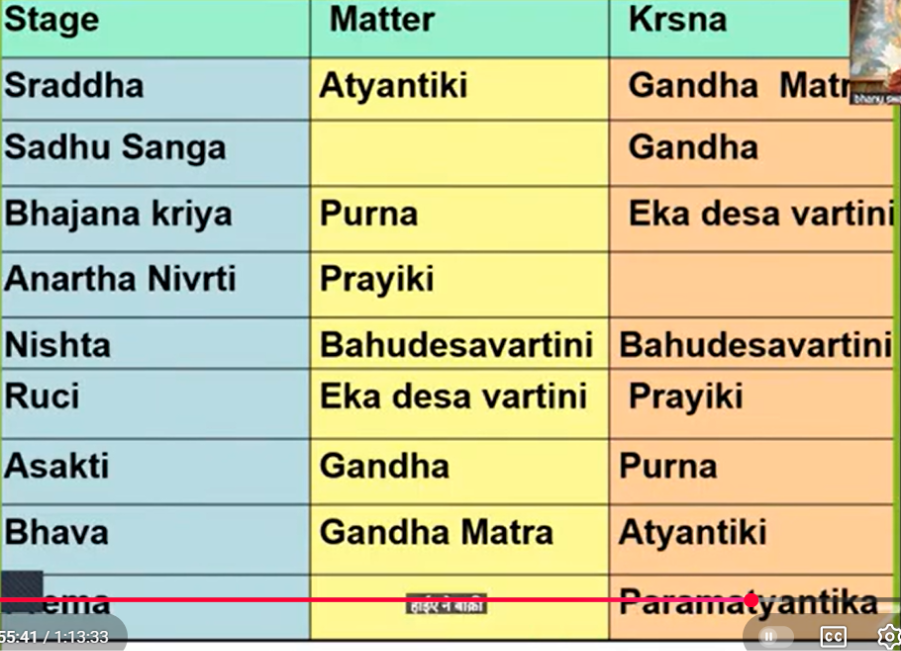
And we get to prema, then nothing to do with the material world at all, and the attraction and possessiveness of Krishna is very intense.
And similarly, we can trace meditation.
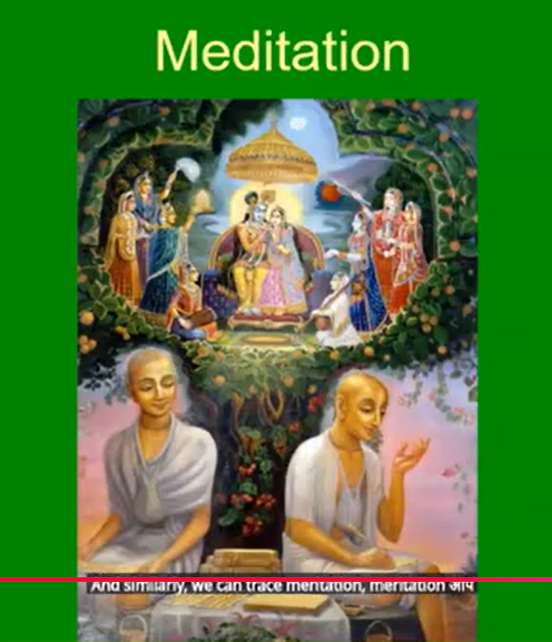
Meditation, of course, on material things is strong in the beginning and becomes weaker and weaker, and meditation on Krishna is weak in the beginning and it becomes stronger and stronger as we develop. So if one is at the stage of asakti, the meditation is very deep. And then in Bhava stage, Krishna appears internally.
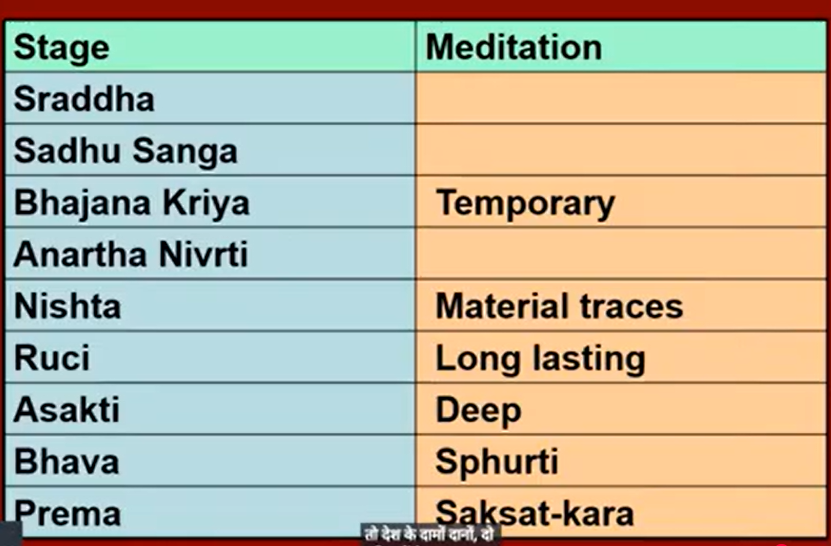
Devotee : Internally or eternally?
HH Bhanu Swami Maharaj : Internally. And then in prema, Krishna directly appears in front of you. Yeah, okay, fine, that’s it [Laughs].
Hare Krishna.
Q & A:
1.) Thank you for the very wonderful and very sweet class. You mentioned that Bhava that can be originated from either sadhana bhakti or raganuga bhakti. So my question is, can a devotee directly go to raga naga bhakti without being in the sadhana bhakti?
Raganuga is sadhana. So raganuga and vaidhi are both sadhana. Of course, one could start with vaidhi sadhana and switch to raganuga sadhana. Or one could just continue vaidhi and have realization in Bhava and in prema with vaidhi. So it is possible to do raganuga from the beginning of sadhana. So we have, for instance, the Vallabha sampradaya. The whole [Laughs] sadhana is also raganuga from the beginning.
2.) I understand Maharaj. Thank you so much. Another question is, you mentioned that in the stage of prema, when devotee has the spiritual body, then again there are many stages and one of them was, I think, is anurag. And you mentioned that in that stage, devotee may think of giving up his body. So in a spiritual body, how can a devotee can think of giving up his body?
Because their bodies are fully spiritual, they can never give up their bodies. But they have this feeling that they’re ready to sacrifice themselves for Krishna.
Devotee : I understand Maharaj. Thank you so much. This lecture is based on Madhurya Kadambini or different book?
HH Bhanu Swami Maharaj : Madhurya Kadambini.
Devotee : Thank you so much, Maharaj. Hare Krishna.
3.) Hare Krishna. Thank you for your wonderful session. Maybe first slide or second slide its mentioned somewhere that Krishna enters the heart of the devotee. What does that mean? Because already Krishna is in the heart as the Paramatma. So what exactly does it mean when Krishna enters the heart or enters the devotee?
Yeah of course Krishna [Not clear] but for the devotee [Not audible] more than Paramatma, Bhagavan functions. Paramatma is a neutral witness, Bhagavan reciprocates with the devotee. So therefore Krishna helps the devotee advance, he helps them destroy the anarthas.
Devotee : Thank you very much.
4.) Its related to the first question. In Bhava stage Krsna enters and the devotee can see Krishna in the heart. Is that correct?
Yeah, so at Nistha, he cannot really see Krishna. But Krishna destroys your anarthas [Laughs]. So at Bhava stage then you can actually perceive Krishna with your spiritual eyes.
Devotee : Thank you very much. Hare Krishna.
5.) Hare Krishna Maharaj ji. When Krishna killed Kamsa and he settled in Mathura, to check the condition of the gopas and gopis in Vrindavan. He called Uddhava and sent Uddhava to Vrindavan by sending his message. There, Uddhava saw that all the Gopas and Gopis were in pain of separation from Krishna. So, Uddhav also felt the same pain and when he returned back, he was still in that pain. Even though Udhav was such a pure devotee and he was in a Prema Bhakti, why does it look like that separation is much higher than the satisfaction in meeting Lord Krishna?
So, in all relationships in the spiritual world, there are two aspects, meeting and separation. There are two parts of Prema. So, we usually look at the meeting as being very joyful. The separation looks painful. But that’s material perception. Because there can be no real pain in the spiritual world. So, that separation, that feeling of pain, is actually part of Prema itself. So, we can say it’s another aspect of bliss. So, it is said that in that separation, it looks like pain. There’s even greater bliss than the bliss of meeting. But that is very difficult to understand, unless you experience that Prema.
Devotee : Thank you Maharaj ji. Hare Krishna.
6.) In one slide it was written that impurities are completely removed at Bhava stage, but we see that Bharath Maharaj fell down from Bhava stage. How can we understand this ?
So, all anarthas, due to Papa and Punya, etc., are finished by the end of Asakti. So, what remains in Bhava can be a trace of previous aparadh. So because Bharath had committed some offense in the previous life, the effect was felt in Bhava stage and then he forgot Vishnu and remembered a deer instead.
Devotees : Hare Krishna. Thank you very much. HH Bhanu Swami Maharaj ji Jai !!! Srila Prabhupad ki Jai !!!